Showing posts with label personal essay. Show all posts

turning 30 and being totally normal about it


Today I am 30, and I am being totally normal about it. 

For many writers, the "I turned 30" personal essay is a genre unto itself. It's a rite of passage. A wellspring of material. Especially for those of us who are women or raised female, and have been told time and time again that life ends after 30 unless we can stay hot and skinny, and if not, you should just, like, kill yourself or something.

But we're not supposed to talk like that. I'm supposed to write an essay titled "30 Things I Learned at 30," and convince you all that I'm well-adjusted and have it figured out. I've got some stuff figured out, if it's any consolation—to you or me, I'm not sure. 

There's this wrinkle on my forehead that has forced me to seriously and shamefully consider Botox. I say shamefully because there's something about using Botox that feels inherently unfeminist, and makes me think that all my past declarations of feminism were done at a time when I was young and supple, which feels like the best and easiest time to be a feminist. Everyone's a feminist until they're 30 and get a wrinkle on their forehead, I guess. 

I have come to this conclusion: we don't care about being 30 unless we look like we're 30. But what is 30 actually supposed to look like? Even at the liminal, Back Rooms-esque age of 29, I'd get comments from 19 to 23-year-old dickheads (said with love) I'd meet at bars who, upon finding out I was on the cliff's edge of 30, would proceed to tell me that I don't even "look 29!" I think it's supposed to be a compliment, but it always makes me feel like being 29 (and God forbid 30) is a moral failing, but don't worry! Because you look great and, oh my god, you're so brave!

The truth of the matter is that 30 means nothing to me, especially in the grand scheme of things. It's too abstract to actually have any kind of impact on my life in earnest, too contradictory to be taken with anything other than a huge pinch of salt. I'm simultaneously told that 30 is this Big Deal but also not, and my personal feelings happen to coincide with the latter, but the former is so culturally pervasive that I'm starting to think that I'm missing something. 

My actual capital T Truth is that I think age has accentuated my best features, and even that wrinkle on my forehead feels kind of charming when I'm in a favorable mood. In spite of the ravages of time, of the superimposed periods of mourning for my 20s lost to mental health crises, and an accumulation of personal trauma and baggage (of which I've been proverbially paying an excess weight fee for since I was at least 22), I feel something akin to happiness. 

Honest to God, I just want to eat a burrito and have a beer with my friends. And I know how trite that sounds. You don't need to tell me. I lived through the "grab my butt and buy me pizza" era of Tumblr. But the thing is, I don't have anything particularly profound to say about turning 30. I think it's just a thing that happens to us all. An unavoidable reality. 

You know what, there is actually something I think about when it comes to the passage of time. And you can be the judge of its profundity. 

I enjoy reading Greek mythology (and its many reinterpretations), and one aspect that has always fascinated me about these stories is the cruelty the Gods inflict upon us mortals because we have the one thing they never will: meaning in finality. Our existences are finite. Things begin and end and begin again. And eventually, they end for good. This makes every action, every choice, every relationship infinitely more meaningful than the Gods (in their limitless wisdom and perpetuity) could ever fathom. Maybe being highly powerful and unchanging is a blast, but it's a reality I'll never know. And I, without any trace of irony, think there's something beautiful about that. The fact that things changethat things endis what saturates them with meaning. 

I am inhabited by clashing feelings, but surprisingly, it's not uncomfortable to sit with. I'm getting older whether I like it or not. I'm learning and changing, and have the opportunity to do so many wonderful things (and so many not wonderful things) and meet so many wonderful (and not wonderful) people. That's where I derive meaning. This, to me, is far more preferable than being captive in a trap of meaninglessness and pessimism, which I have admittedly been a victim of. Perhaps one too many times. 

At any rate... My 20s are dead. Long live 30. And happy birthday to me! 

Why is everything so fucking boring now?


Once upon a time in Internet land, the World Wide Web felt like a space for discovery: unrefined, unpredictable, and uniquely personal. Subculture thrived in weird little corners of the web, often difficult to access unless you knew precisely where to look. These spaces mimicked the spirit of real-world underground movements, imperfect and often resistant to mainstream assimilation. But that dynamic has shifted, not simply because of the prominence of algorithmic platforms, but because those platforms are designed with purpose: to extract profit from predictability. 

The problem isn’t algorithms in the abstract. It’s the fact that they are engineered to benefit advertisers and tech billionaires, certainly not artists, users, and cultural innovators. The architecture of these platforms optimizes for engagement, and engagement favors the extreme, the statistically safe, and the easily categorized. What we widely see online is not a mirror of creativity or desire, but a reflection of what is most easily digested and monetized. The result is a cultural landscape that feels increasingly flat, overproduced, and boring. 

This is coming from someone neck-deep in it. Today, as I scroll through Instagram, I’m met with a monotonous parade of hyper-curated content that masquerades as alternative (or “alt”) culture. Aesthetic diversity has been sanded down into a commodified spectacle, optimized for mass consumption. I keep scrolling as if I’ll stumble upon something radical or cool, strange or arresting, even though I know better than that. It’s not happening. It’s all more or less the same. 


This phenomenon is especially evident in the rise of what might, for convenience, be called “Instagram Alt”–– a version of alternative fashion that prioritizes palatability over expressive honesty. Despite the apparent celebration of non-mainstream styles, the same facial features and body types dominate the Discover page. This homogeneity is not incidental. It is the product of a larger system that rewards aesthetic legibility and conformity under the guise of diversity. 


To be clear, this is not a critique of individual creators, nor a moral indictment of those who participate in these spaces. I am one. Rather, it is a structural critique of the platforms that mediate our aesthetic experiences. The question is not what people choose to create, but what gets seen and rewarded. In the age of platform capitalism, visibility is shaped less by personal expression and more by algorithmic design. 


Social media platforms like TikTok and Instagram are not neutral stages; they are commercial infrastructures governed by engagement metrics and machine learning algorithms. As Zuboff (2019) outlines in The Age of Surveillance Capitalism, these platforms commodify human attention, shaping user behavior in ways that prioritize predictability and, thus, profitability. The algorithm’s preference for specific facial geometries, editing styles, and visual tropes means that even “subversive” content must be aesthetically palatable to achieve visibility. 


Take, for instance, the case of yabi gyaru, a contemporary Chinese interpretation of the Japanese gyaru subculture. The term “yabi” is a compound word that translates to “subcultural cunt,” and refers to a bold and indulgently maximalist aestheitc. At first glance, yabi gyaru appears to celebrate the audacity and expressiveness of its predecessor. However, upon closer inspection, the aesthetic variance collapses: the same homogenized facial features, skinny bodies, and styling choices result in content that feels not like a revival or a continuation, but more like an Instagram performance. This isn’t a jab at yabi itself, which contains a rich visual language, but at the narrow and Instagram-approved version of yabi gyaru that dominates the digital zeitgeist. What we are seeing is not the full spectrum of the style; it’s the part most aligned with dominant beauty standards and therefore most likely to be shared. 


Even traditional Japanese gyaru substyles, such as tsuyome (kuro) or ora ora, are being retrofitted to suit contemporary digital tastes. I recently came across an image of a 2010s-era tsuyome gyaru whose face had been digitally Frankensteined to resemble the Western “Instagram baddie” archetype: smooth, symmetrical, and stripped of the very roughness that once defined the style. The edit was widely shared, reinforcing a feedback loop wherein deviation must still conform to dominant beauty standards to gain traction. Even those doing subculture “correctly” are evidently not doing it correctly enough, according to social media. 


What happens to counterculture when its dissemination is governed by systems designed to eliminate unpredictability? What we’re witnessing is not the organic rise of new movements or the honest continuation of pre-established ones, but the mass production of simulated difference. Content engineered to appear edgy while remaining within cushy and comfortable boundaries. Genuine subversion cannot survive in environments that flatten expression into what Sarah Thornton (1995) termed “subcultural capital,” a form of stylized distinction that ultimately relies on the dominant order rather than resisting it. Hebdige (1979) similarly warned of the recuperation of subcultural signs, whereby resistance is absorbed into the mainstream and stripped of its political charge. 


There is a deep disappointment in realizing that while boundary-pushing creators still exist (and will exist forever), their work remains largely invisible beneath layers of algorithmically preferred sameness. If they’re even posted to these platforms at all because, of course, why should they rely on spaces that do not serve them? On platforms like Instagram, fashion and subculture become content, and every image becomes a catalog. Novelty, speed, and conventional beauty reign supreme. There is little room for experimentation or eccentricity because those things are not the goal and never were.


In this context, platforms themselves become architects of culture, privileging the familiar over the experimental. As Baudrillard (1981) might suggest, we inhabit a “hyperreality” in which representations of subculture replace their original referents. We consume simulations of alternative aesthetics that are easier to digest, share, and monetize, while the disruptive potential of subculture is neutralized or hidden behind a metaphorical curtain.


It’s what's in our digital diet. We are fed the same things over and over again, sometimes seasoned with a veneer of something “new,” but not really. It doesn’t shock, challenge, or upset. It simply performs difference while reinforcing the same aesthetic values that have always been socially acceptable and encouraged. After a while, our ability to imagine something beyond the machine starts to fade.


We spend so much time living online that the borders between digital life and embodied reality are blurred. The internet used to be a destination we visited and returned from. Now, it is the space in which we live. Our phones are not just tools; they are extensions of our hands, our eyes, our identities. And the more time we spend there, the more likely we are to internalize the aesthetic logic of these platforms as a reflection of the world itself. We begin to see algorithmic beauty as objective beauty. What gets liked becomes what gets desired.


Coined by writer Jia Tolentino, “Instagram Face” describes a specific, surgically achievable aesthetic that dominates social media: smooth skin, symmetrical features, plump lips, catlike eyes, and a racially ambiguous yet predominantly Eurocentric look. As more and more people filter themselves through this aesthetic, digitally or physically, we begin to see real-world beauty standards mutate in its image. This is not just imitation; it’s transformation. We begin to desire the face we are constantly shown, and in turn, we produce content that reflects it. We feed it; we become it. This is the algorithm’s most insidious effect: not just flattening expression, but reshaping desire itself. 

Subculture and alt aesthetics in the Internet Age are less about subversiveness and more about identity. They function like a character selection screen: pick your appearance, assign your traits, and join the fray. It’s not about pushing boundaries, but signaling belonging. The purpose isn’t to rebel. It’s to fit in with the right kind (or your preferred kind) of different. In a world where your online presence is your resume, your brand, and your social capital, subcultural style becomes a skin you can wear to stand out just enough, while still keeping one foot planted safely in the zone of acceptability. 

And so we arrive at a central tension: can true innovation and true alternative expression exist on platforms that demand sameness in exchange for visibility? Can formally subversive subcultures survive in spaces owned and designed by capital, where every interaction is mined for data, and every expression is either monetizable or invisible? I would argue it cannot, not in any lasting or radical form. Because the internet we occupy is not neutral ground; it is a commercial infrastructure designed to promote what sells, what spreads, and what sustains the system. 


True alternative culture requires friction. It requires resistance. But friction slows engagement, and resistance threatens stability; two things the algorithm cannot allow. So even our “rebellion” becomes optimized: a miming of chaos, but not truly disruptive; interesting, but not unsettling; different, but not too different. What we’re left with is a pantomime of innovation, alternative in style, but not in substance. 

As Caroline Busta writes in her piece The internet didn’t kill counterculture—you just won’t find it on Instagram: “To be truly countercultural today, in a time of tech hegemony, one has to, above all, betray the platform.” This betrayal doesn’t just mean abandoning social media; it means divesting from the performative self that exists to feed the beast. Subculture that survives the algorithm must do so outside its reach, perhaps pseudonymously, perhaps in encrypted corners, or perhaps not online at all. 

If true subversiveness is to exist, it is not going to be found on Instagram. The dark forest theory of the internet, as adapted from Liu Cixin’s science fiction of the same name and expanded upon by Busta, imagines a digital world in which users retreat from constant visibility in favor of partial obscurity, where community and creativity are cultivated in shadows. In these dim corners, culture is not flattened. It grows like mushrooms in the dark. 

The flattening we’re experiencing isn’t just aesthetic. It's mental. It erodes the muscle memory of rebellion, of eccentricity, of the ugly, the beautiful, and the strange. And maybe that’s the real disappointment of it all: not that it changes what we see, but that it changes what we want to see. And eventually, what we can even fathom at all.

I wrote this because I was bored to the point of despair. It made me want to scream. Not just at the content, but at myself for looking. I found myself craving disruption: something strange, or ugly, or alive enough to cut through the haze. Instead, I now sit with a more personal fear: not just that I have nothing of value to offer, but that whatever I do have (whatever I create or express) is neither subversive enough to matter nor conventional enough to be popular. What does it mean to create under these conditions? I long to be free of this fear entirely: free from optimization, from the attention economy, from the hollow logic of platform performance. I simply want to feel new things. 

Like many others, I’m searching for a medium of expression that resists extraction, for something meaningful that isn’t quietly angling to sell you something. And I have to believe it’s out there. Perhaps it’s just not in the places we’re taught to look.

My Loala Gyaru Makeover Experience Wasn’t What I Hoped It Would Be


───── ⋆⋅☆⋅⋆ ─────

I paid for a gyaru makeover in Shibuya, hoping to connect with the subculture I love. What I got was something far more complicated. An experience that raised difficult questions about cultural identity, empathy, and what it means to participate in a foreign fashion community.

───── ⋆⋅☆⋅⋆ ─────

The Makeover

I want to start by saying this isn’t a service review. It’s not about assigning blame or even focusing on a single interaction. What follows is a personal account of an experience that left me feeling pretty uneasy, and that unease opened the door to larger questions about subculture, identity, and cultural translation. I’ll explore those questions later. For now, I would like to share the experience as it happened. 

There used to be a semi-well-known ganguro café in Tokyo. You’d go, order a tropical cocktail and some takoyaki, and one of the gal waitstaff would give you a gyaru makeover. Before I moved to Japan, I really wanted to go. Unfortunately, the café closed before I ever had the chance.

I assumed that these kinds of “gyaru experiences” had all but disappeared from Tokyo, but with a bit of research, I discovered that wasn’t entirely true.

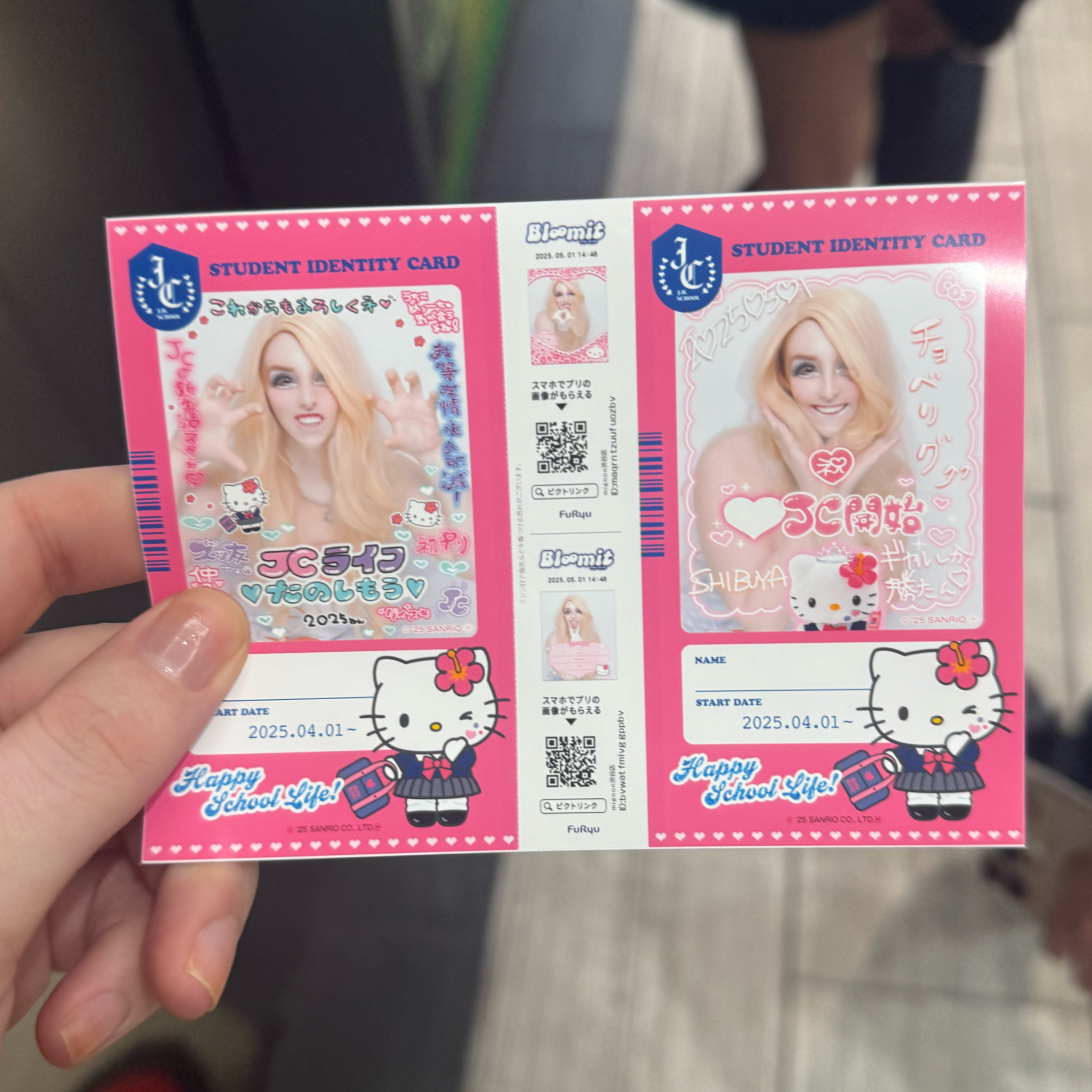
Loala is a fashion magazine distributed at tanning salons in Japan. It launched in June 2022 and features several well-known gyaru models, including some former members of Black Diamond. To my surprise, Loala currently offers a gyaru makeover package: you visit their Shibuya studio, get your makeup done, try on gyaru clothing, and then head to a nearby purikura booth to take photos. The total cost for the experience is 15,000 yen (about $100 USD).

I was ecstatic when I discovered the makeovers. At the time, I had been feeling somewhat disconnected from the gyaru community at large. While I still enjoyed doing gyaru on my own, I didn’t feel particularly connected to others who shared my interest. I thought this experience might be a chance to feel that connection again. I also hoped that getting advice or feedback from a veteran gal might give me some direction.

It's very important to establish, first and foremost, that I understood going in that this was a transactional experience. I wasn’t expecting a real friendship, but I did hope that beyond the basic service, there might be a moment of connection, some shared enthusiasm, or even a brief exchange that felt genuinely mutual. This was my own personal desire. It wasn’t promised. 

I arrived at the designated time and was welcomed into the studio. I wasn’t alone. Another participant, a Hong Kong influencer, was there to vlog her experience. The space was decorated with a fuzzy pink rug, a television looping Loala music videos, and two low vanities for makeup.

The studio

The first of the Loala models arrived a few minutes late. The other was even later. Both were polite, as I expected. As someone who has lived in Tokyo for over a year, I’ve come to recognize Japanese customer service as consistently gracious and professional.

The model who began doing my makeup was a former Black Diamond member, which I found genuinely exciting. I told her about my love for old-school gyaru, my Alba Rosa collection, and my stash of vintage Egg magazines. I even brought my copy of Ganguro Girls to share with her. With that, the makeover began.

She pulled out an extremely dark foundation. In hindsight, I wish I had spoken up more firmly from the beginning. I mentioned that I was concerned it might look like blackface on my fair skin. She responded by saying that this was a part of Japanese identity and culture, not blackface.

At that point, I should have realized we were operating with two entirely different understandings of race, aesthetics, and how makeup is perceived on different features.

I let her proceed. She applied makeup in the style of Buriteri, who famously used foundation intended for Black women to create her look. I naively (and delusionally, honestly) assumed the foundation would be blended out, or softened with concealer. It wasn’t.

When I saw myself in the mirror, it was immediately clear that I should’ve said something sooner. On my white features, the effect read unmistakably as blackface. Regardless of the intent, that was the visual impact.

I asked if she could remove the foundation. By then, we were communicating through a translation app. My Japanese is conversational at best, and I wasn’t equipped to navigate something this complex in the moment. I could tell she wasn’t thrilled about my request, but she agreed. She removed the foundation with a wet wipe, which left my face uneven and muddy. It wasn’t corrected. I suspect timing was a factor. I had paid for a two-hour experience, and that time was running out. In fairness, I should’ve spoken up earlier.

The finished makeup

Afterward, she handed me an Alba Rosa dress and led me and the influencer to a nearby purikura booth. I tried to hide my face behind the blonde wig they gave me and hoped to finish quickly. The intense purikura filters softened the appearance of the makeup, but it all left an acidic feeling in my stomach, so I discarded the photos when I got home.

The purikura

We returned to the studio, removed the makeup and outfits, and I left as soon as I could.

As for the models themselves, I want to be as clear as possible: they were not rude. They were polite and professional (aside from their tardiness), and they fulfilled the service as advertised. They weren’t obligated to be anything more than that. But I had come in hoping for something beyond the transaction: conversation, connection, a sense of shared enthusiasm. And that was my own fault. It set me up for disappointment.

These girls didn’t care about me or my personal investment in the subculture. They were doing a job. While I left feeling something close to a gyaru ego death, I’m sure they won’t remember me. And that’s not really on them.

What it comes down to is an expectation gap. I came looking for community and direction (not entirely unreasonably, I think), but the event just wasn’t built for that.

Cultural Empathy and Misunderstanding

There’s a difference between participating in something as a member of the culture that created it and participating as someone outside that culture. I’ve been a gyaru for almost two years, and I’ve spent countless hours studying it and immersing myself in its history and aesthetics. But I’m a foreign gyaru. I wasn’t raised in Japan, and I didn’t experience gyaru as it originally emerged. My engagement is real, but it’s shaped by a different cultural lens.

What’s fascinating about gyaru is that it’s always been in conversation with the West. From the beginning, gyaru drew heavily from Western fashion trends (tanned skin, bleached hair, surf and club aesthetics), but transmuted them into something uniquely Japanese. It’s a subculture built on reinterpretation, on making something foreign feel like one’s own. And for those of us outside Japan trying to connect with it, that process of translation continues, but in reverse. We’re interpreting an interpretation, and trying to participate in something that was never designed with us in mind.

When the model told me the makeup was “part of Japanese identity and culture,” I understood that she wasn’t trying to be dismissive. She was expressing something real, something I didn’t (and maybe couldn’t) fully grasp. Gyaru, and especially ganguro, emerged in a very specific cultural context: a reaction to mainstream beauty standards, a celebration of excess, and in some cases, a flirtation with the taboo. But none of that erases how it might look (or feel) when performed on a non-Japanese body, particularly a white one.

In this specific situation, it was my white American face wearing the makeup, and that carries a different set of cultural connotations. While a darker foundation shade may not register as racially insensitive on a Japanese face to the same degree, it absolutely will on someone like me. That doesn’t mean it’s never viewed as problematic in Japan (because it can be, and sometimes is), but it’s far less likely to be questioned or acknowledged on a broad scale. Japan is a highly insular culture, and when something is seen as a local aesthetic choice, there is very little internal pressure to examine or challenge it. In contrast, in the United States, public discourse and community accountability around race, especially when it comes to representations of Blackness, are more active and expected. What might pass unnoticed in Japan can carry a very different weight when seen on a Western face. The visual impact simply doesn’t translate cleanly across cultures.

"There’s a difference between participating in something as a member of the culture that created it and participating as someone outside that culture."

Part of what complicates this even further is that Japan doesn’t share the same historical relationship to race that Western countries do. There is no long-standing national history of blackface in Japan, and no parallel legacy of racial violence toward Black people in the same way as in the U.S. or Europe. So the symbols and aesthetics that feel loaded (painful, even) to someone from the West may not carry the same cultural weight for someone raised in Japan. That doesn’t make them innocent or harmless, but it does help explain why such a disconnect can occur.

That’s the uncomfortable space I found myself in. I wasn’t being intentionally harmed or disrespected, but I wasn’t being heard. My discomfort didn’t fit into the usual script, and I didn’t have the language or cultural footing to challenge it on the spot. Instead, we both carried on, with an ever-growing gap between us. 

Empathy is often framed as a soft skill, something gentle and affirming. But I believe that sometimes empathy can require friction. And it most certainly requires work. It asks us to question our assumptions and pause before defending our intent.

I explained to her that I understood what she meant, that I wasn’t accusing her of blackface, that I knew this look came from a very specific Japanese context. I even spoke with my Japanese friends and boyfriend afterward to better understand how this type of makeup is perceived here. I expressed, both then and now, that I understood where she was coming from.

But part of my pain comes from the fact that I didn’t feel that the same courtesy was extended to me.

Of course, she wasn't required to. We were strangers. This was a transactional interaction. But it would’ve meant a lot. It would’ve made me feel like I wasn’t just an easy way to make money, but a person she was willing to try and understand.

It’s also important to acknowledge that by this point, we were using a translation app to communicate. That’s no small thing. A lot of nuance (emotion, intent, vulnerability) may have been lost there. The very tools we relied on to understand each other may have helped obscure the heart of what we were both trying to say.

So maybe this was never really about one person failing to empathize with another. Perhaps it was about the limits of empathy when two people communicate through layers of language, culture, history, and screens. Still, it hurt. And it still does.

Reality vs. Expectation in Subculture

Online, subculture often feels accessible, even intimate. You find people who share your interests, exchange knowledge, swap photos, and build a sense of belonging through shared language and aesthetics. That was my entry point into gyaru. Through forums, scans, and social media, I built a vision of what gyaru was, and what it could be for someone like me.

But reality is rarely as romantic as the version we construct in our heads. When I finally had the chance to interact with gyaru in a more “official” or in-person capacity, it felt strangely hollow. Not fake, not hostile, just... kind of indifferent. What had felt communal and full of possibilities online now felt empty and transactional.

After the Loala experience, I talked to my boyfriend about it. He’s 28 now, so he wasn’t a teenager during the height of old-school gyaru, but he was growing up in Tokyo while it was happening. He saw it in real time. I asked him what he remembered, and he told me (gently but directly) that sometimes, gyaru really was just vacant and vain. Not always, of course. Not everyone. But that was how it often came across to him and his peers. It was a trend. It was a phase. 

"...subculture is not always a collective: it can be fragmented, business-oriented, or even ambivalent."

It was jarring to hear that, because the gyaru I chase (the gyaru many gaijin gyaru celebrate) is something else entirely. Something bigger. More purposeful. Sacred, even. I think we have to be honest about the fact that we mythologize gyaru. Not in a malicious or appropriative way, many of us are careful not to fetishize the culture or the people; however, we don’t always discuss the extent to which we project meaning onto it. Meaning that maybe wasn’t ever there to begin with. 

My boyfriend has always been supportive of my interests, but to him, gyaru was just another fashion trend. It came and went. And in a lot of ways, the loudest versions of gyaru that still exist in Japan today are professionalized: models, influencers, YouTubers. People making content or selling products. That’s not necessarily a bad thing, but it’s different from what I imagined. Different from what I wanted.

Subcultures promise community, but what they actually offer depends on context. Online, I felt like I was participating in something larger than myself. In person, I was reminded that subculture is not always a collective: it can be fragmented, business-oriented, or even ambivalent. That’s not inherently bad, but it does clash with the romanticized versions many of us build, especially from afar.

What I thought would feel like coming home ended up feeling more like showing up to someone else’s party, uninvited and unwanted.

Identity and Authenticity

After the experience, I found myself questioning not just the community, but myself. What does it mean to call yourself gyaru if the people most associated with that identity don’t acknowledge you, or seem entirely indifferent?

I’ve never claimed to be a perfect gyaru. I’ve never aspired to mimic someone else’s version of gal. I approach the style with care, with study, and with genuine passion. But none of that guarantees that others will see you as legitimate. And when you’re a foreigner participating in another culture's fashion, there’s always a low-level hum of doubt. Am I participating, or am I just performing?

What complicates this is that I’ve never doubted my own sincerity. Gyaru isn’t something I put on for photos; it’s embedded in the way I dress, the aesthetics I’m drawn to, the media I consume. But sincerity is internal. Authenticity, on the other hand, is often determined by others, by whether or not you’re accepted, acknowledged, or understood. And when that recognition is missing, you’re left to wonder what your place in the subculture really is.

Like many gaijin gyaru, I came to the subculture through fragments: magazine scans, old purikura, grainy videos, and untranslated blog posts. These pieces weren’t just informative; they were sacred. I studied them obsessively, building a picture of gyaru from primary sources, filling in the gaps with what I could gather and infer based on everything I'd learned. 

That reverence can be beautiful; it’s part of what has kept the gaijin gyaru community alive, but it can also distort. We talk often about avoiding fetishization, about not reducing gyaru to aesthetic tropes or commodified versions of Japanese girlhood. But we talk less about how we mythologize it. How we project onto it our longing for meaning, for rebellion, for belonging. We romanticize a past we were never part of, and in doing so, sometimes miss the more complicated, messy truth of what gyaru was and what it has become.

"It shook something in me, not because I felt exposed or unworthy, but because I had placed so much faith in the idea that sincerity would be enough... But subculture doesn’t always work that way. It’s not a system where effort begets belonging."

That day at the studio, I fully understood that I was paying for a service. It was a transactional experience, and I accepted that. But even transactions can carry a degree of care. Like a good haircut—you may be paying for it, but there's still intention behind the work, a hope that you'll leave feeling satisfied. That was the kind of interaction I had envisioned. Not true friendship, of course, but a shared moment of engagement. A sense that my presence and my investment in gyaru meant something. Instead, the entire exchange felt impersonal, mechanical, and devoid of warmth.

If I had come for content, like the Hong Kong influencer beside me, perhaps I wouldn’t have minded. She got what she came for. But I had arrived hoping for something less tangible; I wanted connection. I wanted to learn. I asked questions, genuinely wanting insight, advice, or anything I could apply to my own practice, but the responses were cursory. Nothing I hadn’t already read or heard.

And if I'm honest, the makeup itself was poorly done. Even before the wet wipe touched my face, the application felt rushed. The eye makeup lacked polish. My blonde lashes weren’t blended into the falsies, leaving the look unfinished and unrefined. There was no real technique, no attention to detail. And by the end of it, I felt similarly handled: processed, rather than styled. 

It shook something in me, not because I felt exposed or unworthy, but because I had placed so much faith in the idea that sincerity would be enough. If I showed up with genuine interest and thoughtful participation, I would find recognition. But subculture doesn’t always work that way. It’s not a system where effort begets belonging.

Sometimes, no matter how much you care or how hard you try, you can still find yourself on the outside.

The Business of Subculture

Subcultures have always walked a fine line between authenticity and commodification, but those grounded in fashion and aesthetics, rather than explicit political ideology, are particularly vulnerable to becoming products. Gyaru, with its visual excess and built-in consumer identity, was never anti-capitalist. It was never underground. From its inception, gyaru was visible, aspirational, and closely tied to consumption: of magazines, trends, and beauty products. In that sense, its commercialization wasn’t a betrayal; it was baked in from the beginning.

However, even within fashion-based subcultures, there is a distinction between dressing the part and selling the image, between living within a style and profiting from it.

The concept of the “business gyaru” isn’t new. Morimoto Yoko, a gyaru icon in her own right, known both as a former Egoist staff member and one of the famous charisma clerks at Shibuya 109 in the 1990s, described herself that way in a 2023 interview with Yomiuri. As an older sister gal, she occupied a central place in the gyaru scene during its golden age. But even then, she said that once her shift ended, she would quietly take off her wig and platform boots, slip out the back of the store, and return home. “I was a business gyaru, I guess,” she said. Gyaru, for her, was both a performance and a job, even at its cultural peak.

That duality still exists, but the balance has shifted. Today, the most visible gyaru figures in Japan are overwhelmingly professionals: models, influencers, bikini idols, or promotional faces for tanning salons and fashion brands. Their social media presence is carefully curated, often sexualized, and almost always monetized. They are not just doing gyaru; they are selling it. And that is, of course, how we as gaijin gyaru even know they exist.

"There was no sense of community, no mutual investment... [the Laola gals] were not there to share gyaru with me. They were there to model it." 

This is the paradox: the only gyaru who remain highly visible are those who have something to promote. That visibility becomes synonymous with legitimacy, and so the image of gyaru that reaches the international community is filtered through the language of branding. What we see is not the girl on the train, the club regular, or the teen rebelling in her small town; we see the bikini model, the influencer, the girl with a product link in her Instagram bio.

In contrast, most gaijin gyaru engage with the subculture in profoundly different ways. We are, by in large, not building careers on it. For many of us, gyaru is unpaid, self-directed labor. It is study, aesthetic obsession, and personal ritual. We comb through old magazines, dissect tutorials, trade tips, and style ourselves for no audience but each other. In that sense, gaijin gyaru often embody the "lifestyle" ideal in a more literal way than the most visible Japanese figures do today.

This is not to suggest that one form of participation is more authentic than another. Professional models are no less "real" for monetizing their image. But the divergence matters. It creates a disconnect between how gyaru is lived privately and how it circulates publicly. And for those of us who came to gyaru through mediated fragments, this gap between what we imagined and what we now see can be jarring.

The Loala experience brought that divide into sharp focus. I wasn’t engaging with a living subculture; I was buying into a service. There was no sense of community, no mutual investment. The girls were polite and professional. But they were not there to share gyaru with me. They were there to model it. 

What I'm Left With... 

I didn’t write this to draw a line in the sand or to declare what gyaru is or isn’t. I wrote it because I had an experience that forced me to reexamine the relationship I’ve built with this subculture and the stories I’ve told myself about it.

There’s no clean moral here. I’m not interested in painting myself as a victim or assigning blame to anyone involved. What happened was a product of many overlapping factors: cultural differences, language barriers, shifting expectations, and the structural realities of how subcultures survive in a hyper-visual, commodified age.

But it mattered because it revealed how much I had projected onto gyaru and how much I had hoped it would offer me in return. And it mattered because it reminded me that sincerity isn’t always enough; that care doesn’t always come back to you; that love, even when deeply felt, doesn’t guarantee belonging.

And still, I love gyaru. Maybe differently now. Maybe more cautiously. But that love hasn’t disappeared. 

What I’m left with isn’t resentment, but a clearer understanding of what it means to love something from the outside. Gyaru was never mine to inherit, but I chose to participate anyway. Not for validation, but because it resonated with something deep within me. That meaning is more personal and maybe more private than before, but it still endures. 

Why I'm Tired of Performing Online (And What That Has to Do with Gyaru)

Galsnap as viewed through the Wayback Machine


I was a middle schooler at a time when phones weren't that smart. Social media was the Wild West. Each discovered platform felt new, a cool and fresh way to express yourself and connect with others. These days, when I compare my memory of social media as an 11-year-old to social media now, the one thing that stands out is how everything has become about buying and being sold. 

My Instagram is almost entirely co-opted by ads. I'll sooner see an ad for some new, drop-shipped kawaii brand on my timeline than I'll see a post from one of my actual friends. And when I do see a post from my friends, they are usually stylized to the point of looking like an editorial in a magazine. I don't think this is a coincidence. 

Long gone are the days of blurry breakfast photos or a funny-faced, too-close snapshot with friends. Everything is so filtered (and I don't mean in sepia or Mayfair) and well-composed. Their outfits looked planned in advance, same with the location. It all has the air of a professional photo shoot, even when it's a post by your buddy who works in finance. 

I remember when this switch was occurring: when we were going from random home-photos to meticulously coordinating the aesthetics of our grid. I thought it was pretty cool at the time. I wanted to take part. But the longer it's gone on, the more I've come to loathe it. It didn't take long for me to identify why it sits so poorly. 

I've boiled it down to two specific reasons: 

1. The everyday person has to transform themselves into a brand. 

2. (and this is a consequence of 1) We are all constantly selling ourselves. 

And for what? To whom?? It makes sense for a company's Instagram to be selling something, but for the average user, what's the objective? Why are we expected to perform the same way? I think this coincides with hustle culture and the idea that we must optimize every single second of our lives and that not a nano-second of it should be wasted on something that doesn't potentially make us money. That last point is particularly funny to me because I think that in spite of this push for "hustling" and "optimization" we do have a tendency to waste a lot of our time doom-scrolling. 

Now everyone’s an influencer. We’re all trying to prove that we’re interesting, worthy, creative. That our output has value.

I'm not a hustler. I am a woman of leisure. I think life is about enjoying it, taking care of each other, and making meaning wherever we can. I'm also under no delusion that I'm some special person whose ideas or art needs to be heard/experienced on a wide scale. That's not to suggest that I think I should stop vocalizing my ideas or making art simply because it's not "the best" or super popular. Far from it. I think the exact opposite. I think it's worth making art even if nobody cares. Even if nobody ever cares. 

If you've made it this far, I'm sure you're wondering how I'm going to connect this to gyaru. If you're one of my friends or have been here a while, then you'll know I can connect anything to gyaru. 

These days, most of the modern gyaru congregate on Twitter (X) and Instagram. I would love to be a bigger part of the community, and have longed for it since I first got into gyaru, but the way that most popular gyaru figures use social media these days is so... off-putting to me. 

This isn’t a critique of any individual gyaru creator, but rather an observation of what it takes to gain visibility on today’s social media platforms. The most popular gyaru (both Japanese and gaijin) tend to converge on a highly specific aesthetic. It’s a polished, consistent version of gyaru that clearly resonates with Gen Z and Gen Alpha audiences. Their success often hinges not just on style, but on strategic posting, branding, and engagement. Many Japanese gyaru today double as bikini models or hostesses, roles long associated with the subculture, but their self-promotion (whether for girls’ bars, club events, or personal brands) feels distinctly shaped by the algorithm-driven internet age. Likewise, prominent gaijin gyaru typically monetize their personas through content creation, music, fashion, or sponsored posts. What results is a kind of homogenization: a gyaru image tailored for maximum reach, visibility, and marketability.

To be clear, I’m not suggesting that any of this is inherently unethical. Sex work and its adjacent industries are legitimate forms of labor and should be safe, respected, and de-stigmatized. Likewise, getting paid for your work (creative, aesthetic, or otherwise) doesn’t diminish its value or authenticity.

What I’m pointing to is the broader shift: gyaru, like so many alternative subcultures, has become a business. When something becomes popular, it becomes sellable. This isn’t so much a critique of the individuals participating in that system as it is of the platforms that incentivize this behavior. Algorithms reward what generates profit, especially for the platforms themselves.

So...where do we go from here? I almost ended this as just a reflection on a modern trend, but I’m honestly exhausted by doomer takes that stop at “Well, what can we even do?” Sure, we may not have the power to overhaul these platforms on our own, but that doesn’t mean we’re powerless.

If you're like me and feel alienated by the way social media functions today, there are really only two choices: opt out completely, or reclaim it on your own terms.

If you’re gyaru (and even if you’re not), post whatever the hell you want. Maybe you already are. Amazing! Keep going. Spam a bunch of pics in a single day, then vanish for a month. Post what you want, when you want. That’s the point. 

It starts with us. 

The motivation shouldn’t be external validation. It should be inner joy. 

Shibuya 109: The Rise and Fall of Gyaru’s Holy Land


Located across the street from Shibuya station, Shibuya 109 (or Marukyu) is the kitschy cylindrical landmark of Dogenzaka. As I emerge from the metro exit, I see it right away. It’s hard to miss. Its metallic silver panels sparkle in the morning sun. Even on a Wednesday, it’s crowded. I push through clusters of meandering tourists, gawking at the city through the lenses of iPhone cameras. Salarymen hurry across the junction in their navy suits. It’s early, but there’s a cacophony of noise: the bird-like trill of crosswalks, rumbling black taxis, J-pop coming from God knows where, and advertisements for some new Netflix anime blaring from giant monitors.

I duck under the shade of Marukyu's entryway, passing fashionable young women wearing crimson eyeshadow and ink-black twin tails. They’re carrying shopping bags from Rojita and Ma*rs, two Marukyu-housed labels catering to Jirai Kei, a darker version of Girly Kei with subcultural roots in the edgy teens of Kabukicho. Opposite, people rush in and out of smaller alleyways, leading to more shops, cafes, and izakayas. These streets are the district’s arteries, and 109 is the heart.

Such department stores are located everywhere, but Marukyu is more than a shopping destination; it's a cultural icon. In fact, its visionary architect, Minoru Takeyama, aimed to create a “fashion community” that stood out among its contemporaries. It did not take off immediately. That’s not to say it wasn't profitable, but it didn't become the cultural touchstone it is today until the gyaru boom of the 1990s.

This is where my own love story with Marukyu begins.

My introduction to gyaru was through the ultra-cool, ulta-reverent subculture magazine Egg. I recall being drawn in by those depictions of the rough and raw early years of gyaru when Ganguros — with their bleached hair, tan skin, and white circles around their eyes — prowled the streets of Shibuya in packs. I wanted to know them. Be them. They were mostly middle-class teenage girls who teetered on mega-high platforms and wore colorful, often provocative clothing. It didn’t take me long to learn that these clothes were purchased at Marukyu.

I was born in 1996. By the time I became aware of gyaru fashion, the Ganguro peak had long died. I missed the party by a good 25 years. I am reminded of this as I walk inside Marukyu today, in 2024.

It’s beautiful and bright. The first floor carries garments in conservative shades of off-white, oatmeal beige, and charcoal-black. It’s not all neutrals: dusty pinks and faded lavenders stand out among the achromic fray. Past the clothing stores, there are sleek counters of international cosmetic brands, natural-looking colored contacts, and girly bejeweled purses. A quote from Kate Klippensteen’s 2000 book Ganguro Girls comes to mind as I take the escalator up: “An extended walk through [Shibuya 109]… is dazzling, as in the way a circus may be.” This couldn't be further from the truth now, as Marukyu resembles more of a NewJeans music video than a circus. Given K-pop’s stronghold on Japanese fashion over the last decade, I assume it’s intentional.

As I take minced steps—I’m wearing my tallest Ganguro platforms—around the second floor, a strange feeling strikes me that is too complex to be sadness. I feel like I missed out on something significant. It’s painful, but it’s tender. It's nostalgia for a time I never experienced. But I'm old enough to check myself and this false notion of cultural (or subcultural, as it were) excellence. That which seemed golden and mythic was not without its shortcomings. And yet the feeling persists. I’ve been to 109 with Japanese friends who, like me, are nearing the end of their 20s. They lament how different this Marukyu looks from the Marukyu of their teens. It’s all a little surreal.

At the height of ganguro, the fashion emporium was brimming with vibrant and coveted labels like Egoist, Alba Rosa, Kapalua, Cecil McBee, Pinky Girls, Coco Bongo, Sneep Dip, Love Pets, and Jassie. Only Egoist remains, although it is nearly unrecognizable from the Egoist of the 1990s.

From the sheer amount of content I’ve consumed on Marukyu at its peak, it’s easy to imagine what it must’ve looked like in the late ‘90s and early 2000s. It’s the circus of Kilppensteen’s memory. Flashy vinyl shopping bags bear the names of sought-after brands, making just as much of a fashion statement as the garments they contain. The girls have tan faces and white-painted lips surrounded by a stiff tangle of blonde, silver, or orange hair, their eyes powdered in blacks and blues like a bruise—but it’s cool. It’s sexy. White highlights their aegyo sal (the pocket of fat directly under the eye) and brow bones. They purchase wooden platform sandals from Idol (stylized with a red heart for an 'O') for a reasonable 7,600 yen. It’s a hangout spot and a place to spend birthday money all in one. The stores are a museum of plastic bangles, neon-colored capris, lemon yellow bra and panty sets, floppy hats and denim jackets, 60s style baby doll dresses, and knee-length skirts with tropical, silk-printed motifs. In the words of Penny Lane, “It’s all happening,” and it’s happening here.

It’s the present day, and I'm making my way up 109’s eight-floor spiral in silent contemplation. I'm oscillating between two time periods. Then and now. Now: there’s a campaign going on, which is par for the course for the department store. It’s the Kawaii Omiyage promotion. I grab one of the fliers. The advertising features two bronzed and toned models styled as gyaru, a tribute to Marukyu's past clientele—a clientele they no longer serve.

I've come to Marukyu several times in a short period in preparation for this article. I'm sure the staff are curious—probably not. They are hard to read because they are true pros of retail, unwilling to allow negativity to mar their perfectly done-up features. They smile; they say “irasshaimase” in practiced, drawn-out tones. Each employee embodies the aesthetic values of the store they work for. They look like they belong on a film set. Beautiful walking mannequins.

As I check out at Moussy (a store produced by former Egoist staffer and gyaru model Morimoto Yoko), where I am purchasing a shirt from the campaign, I notice a QR code at the counter that links to a shop clerk’s Instagram profile. In a way, it reminds me of the カリスマ店員 (or charismatic sales clerk) phenomena of the mid-90s, a contributor to the deification of Marukyu as a place — no, THE place — where gyaru went to worship.

Well, it’s comparable, and yet nothing like it. It’s a time that could never happen again.

Kita Shozo, Marukyu's previous PR manager and editor at Tokyo Street News, most likely coined the term "charismatic sales clerk" sometime before 1999. Kita and his team built the image of the charismatic clerk from the ground up, handpicking girls to appear in magazines and on television. These appearances contributed to the charismatic clerks’ prominence in Japanese pop culture. These young women became icons among gyaru.

Teenage girls would buy whatever clothes the clerks wore, so they were instructed to change outfits several times a day. The teens copied their hairstyles, their preferences in jewelry (gold or silver?), and even the placement of their piercings. If the clerks were seen on the streets of Shibuya, high school girls would squeal with delight as if they were meeting a famous idol. Kita and his colleagues ensured that the clerks provided detailed tutorials on how they style their hair and apply their make-up in the magazines they featured in, most notably a 1999 edition of GalsUp! solely centered on Marukyu's charismatic clerks.

Morimoto Yoko (who appeared in countless fashion serials as an Egoist staff member) was hesitant to receive a 1999 award for her role as a charismatic store clerk due to how much Kita orchestrated the concept's success. She didn't feel responsible. I’d beg to differ. In spite of the significant backstage involvement of Marukyu’s suits’, the young women (the staffers and customers alike) drove fashion and cultural trends. They still do.

I’ve reached the summit. Well, sort of. The eighth floor houses an event space and gacha gacha, neither of which I need. So, for me, the seventh is the pinnacle. A store called Spinns sells tan, Ganguro-looking Hello Kitty merchandise and even has some vintage Egg mags on display. While Marukyu is no longer a place for Ganguro, their presence is still felt. There's an echo. I can feel it all around me as I take an extended walk through this historic structure.

In Kubo Yuka's exceptional book, The Last Moments of the Ganguro Tribe: A Study of Gyaru Culture, Kubo speaks to a former Yamanba gyaru (a more garish extension of ganguro that emerged around the same time) and asks her why she believes the trend died out. The former Yamanba, Yuko-san, astutely remarks, “Until then, by putting on nice makeup, wearing expensive clothes, going to Shibuya every day… you could make good connections, get featured in the media, and get work. But since the Internet came along, everyone just thought it was enough to dress interestingly, take good photos, and get compliments from their friends online. Everything became superficial.”

It feels almost gauche to blame everything on the Internet, but there is a link. According to Kubo, ganguro disappeared from Shibuya in 2008. The first iPhone debuted in 2007.

The ganguro may be gone, but gyaru remains, largely thanks to the resurgence of interest in Y2K and Heisei-era aesthetics. It’s not uncommon to scroll through Instagram’s gyaru tag and see young people imitating the appearance of old-school gals. It’s virtually impossible to tell who’s wearing it as a costume and who is an “actual” gyaru. I’m not sure if it matters. Around 2022, coinciding with the release of softboiledegg's song, "Gal is Mind," the term「マインドギャル」 (or mind gal) became a popular concept. It denotes the idea that one can be gyaru even if they lack the look, which is a contentious idea and hotly debated within the gaijin (foreigner) gyaru community.

Egg magazine still exists, though it’s decidedly less cool and reverent. The models are “gyaru talent” and take Shein sponsorships. It’s a new age, but the past is ever-present. As I look at the latest crop of gyaru influencers, I recall a quote Morimoto Yoko gave to the online news publication Yomiuri in 2023. When her workday at Egoist was over, she would take off her wig and platform boots, sneak out the back, and go home discreetly. “I was a ‘business gyaru,’ I guess,” she said.

Perhaps it was always about business. Shibuya 109 is, first and foremost, a business operated by a subsidiary of the Tokyu Corporation.

Despite its origins in rebellion, gyaru, like most popular subcultures, includes elements of mass production. Kate Klippensteen nailed it when she described gyaru as a "conformist society within the conformist society at large," followed by an even truer statement: “[And yet,] they have made the choice not to follow the pack.”

unpacking the concept of マインドギャル / mind gyaru and subculture in the new age

When I first heard softboiledegg's cheeky rap number, "Gal is Mind" I was stoked. I was new to gal and hungry for everything gyaru, and the song was a sort of salve for my many newbie insecurities that I wasn't gyaru enough. It didn't matter because gal is mind. 

While predrinking at a friend's flat before Pride, I added the song to the Spotify queue. Quite a few people at the party knew it. Some even sang along (well, to the English bits). I no longer use TikTok, so I had no idea the song had a bit of a viral moment a few months before, breaking out of the gyaru subculture bubble and reaching a new audience of Y2K devotees and McBling aficionados.  

Later. I went to a gyaru para para event in Tokyo. 

My make and coord for the event.

I hadn't gone inside yet. My friend and I lingered on the street opposite the venue like a pair of gutter rats in the dirty alleyways of Kabukicho, gossiping and smoking. We were having an idle conversation with some people my friend knew. I made a passing remark that I wasn't seeing many gyaru at this gyaru event, and one of the girls said, "Well, gal is mind." The way I felt upon hearing this was almost the exact opposite of when I first heard the song of the same name. The sentiment tasted bad. It tasted like an excuse. 

We went inside. There was no para para at this para para event and even fewer gyaru. I got the distinct impression that those who attended did so because it was The Thing to do that night. I can't blame them for that. 

Gyaru, as a fashion and makeup-based subculture, has come a long way since its boom in the 1990s. Despite the fact that I sometimes use language that sounds a bit gatekeep-y, I have no qualms about gals' evolution and its natural branching out into new substyles and variations. I think it's necessary to keep the culture alive. Adapt or die. 

Old subcultures (if they are still to be practiced and engaged with by young people) will inevitably start to reflect the sentiments of the modern era. It's 2024, and everything cool on the Internet is a hyper-niche aesthetic. Don't get me wrong: these aesthetics can be fun and harmless, but at the same time, it all feels a little... corporate. It's the kind of terminology you'd find in a Brand Bible or concocted by shady fashion mag execs in an attempt to sell us expensive skin goop or flash-in-the-pan trendy apparel that nobody will be wearing in a few months. 

When it comes down to it, TikTok's hunger to commodify every fashion trend is par for the course for the teenage experience (TikTok's primary user base), which is defined by defining: oneself, the world, and our place within it. Joining a cultural subgroup is one way to tackle all those tricky questions without having to think too hard about their answers. These subcultures provided solutions for what to wear, what music to listen to, and where to hang out. That being said, I don't think this was the traditional method by which people engaged with subcultures. It was the reverse. People dressed in a certain manner, listened to certain music, and hung out in certain locations. The labels were imposed later.

It's gauche to blame everything on the Internet, but it would be irresponsible not to note its impact on subcultures and their formation. What once was counterculture is now mainstream. Grime, drag, goth, skater, emo, greaser, lolita. Elements from all these groups have been adopted by "normies" and commercialized in one way or another. The internet homogenizes. It's a gateway to a world of previously inaccessible information (which is beautiful), but that also means things are quick to get hollowed out. Co-opted. This cycle wasn't something that didn't happen pre-internet, but the Internet has sped it up to an almost dizzying rate. 

It'd be easy to throw in the towel and melodramatically say, "Internet killed the subculture," but I'm not sure that's true. Perhaps subculture just looks different now. There isn't much to complain about regarding subcultures birthed post-Internet (well, that's not true. There's always something to complain about), but for groups born pre-Internet, readjusting to a digital world was bound to be awkward. Gyaru is no exception.

In Dylan Clark's The Death and Life of Punk, The Last Subculture, Clark argues that "classic subcultures" disappeared due to increased social examination, nostalgia, and commercialization. "Marketers long ago awakened to the fact that subcultures are expedient vehicles for selling music, cars, clothing, cosmetics, and everything else under the sun" (pg 2 of the pdf). The aesthetic components of subculture are especially easy to exploit and commodify. For a group like gyaru, whose subcultural core is based on fashion and make-up, it's no surprise that it's been disassembled for parts. 

The attire, the tan, the bleached and teased hairstyles, and the flashy makeup of gyaru are all part of a living narrative. The heart of the gal. They represent character and the gal's dedication to having fun and speaking her mind (which is where the mind gyaru fad rests). Gyaru (and its associated visuals) has been used in all manner of advertising in Japan, most recently in a flier for the Kawaii Omiyage campaign at Shibuya 109. 

In many respects, the gyaru mien has become shorthand for Japanese teenage whimsy (or vapidity) and encapsulates the nostalgia many have for the Heisei era. What was once a legitimate fashion trend with apparel sold at Shibuya 109 is now a costume. That's not to suggest there aren't present practitioners. As someone who dresses like an old-school ganguro in this year of our lord 2024, I can testify to this. And I've haunted enough gyaru internet forums to see others like me, dressed in himekaji, yamanba, or any number of the various other gyaru substyles with a genuine sincerity that equals the "original" gals of the late 1990s or 2010s. It'd be incorrect to claim that gyaru is some dead relic of a distant past when many of us still exist, albeit reduced in numbers. 

In 2022, the concept of the mind gyaru became popular. What is a mind gyaru? It is, most simply, a gyaru of the mind. It's someone who adheres to the behavioral features of gyaru but none of the aesthetic ones. It's not strange that someone would want to think like a gyaru when its behavioral associations revolve around having fun and doing whatever you want. While gyaru did emerge as a sort of "fuck you" to Japanese society at large, it isn't exactly a political movement. They weren't associated with any political party, didn't have an agenda to overthrow the government (although that would be cool), and the gals didn't have much ambition outside of being themselves and looking cute. 

The real contention lies in these mind gyaru labeling themselves "gyaru." Unlike a subculture like punk, whose members generally disliked labels of any kind, calling oneself a gyaru is a badge of honor. The visual components of gal are a craft (it's been compared to drag on a few occasions) that many invest a significant amount of money and time to develop. When someone rocks up wearing none of gyaru's deeply important aesthetic markers and insists that they are a gyaru "just like you!" well... it's insulting. It's also clear they have no fundamental understanding of gyaru history, because if they did, they'd see how silly the assertion is. The subculture is dependent upon makeup and fashion as its primary mode of expression. 

Perhaps this will upset some gyaru in the community, but I believe that gyaru is not a subculture with enough political principles or unique behaviors for those things to exist on their own while remaining recognizably "gyaru." Gal's verve has always been its makeup. When these elements are removed, you are left with an attitude comparable to that of many other subcultures or even confident "normies." It's no longer gyaru.

The mind gyaru as a concept has ostensibly neutralized the gal, reducing its ability as a counterculture to generate meaning and subvert through appearance. So leveled, you are left with something that isn't gyaru at all, but a nebulous concept that can be packaged and sold. Something you can put in your TikTok bio.

By all means, think like a gyaru. It's a fun and frequently rewarding way to conduct your life. But in this case, I believe it is better to forego the impulse to hyper-classify oneself and simply exist as the multidimensional being that you are.

gal blogging: one gyaru's relationship with the internet

Before Instagram and Twitter (I'm not calling it X) became the social media titans they are today, there was blogging. Jorn Barger coined the term "weblog" in 1997, and Peter Morholz abridged it to "blog" two years later. The platform Blogger (on which this post is hosted! Hi, queen!) was founded in 1999, and Livejournal and Xanga followed. The rest is history. From mommy bloggers to Lord of the Rings slash fic, there's a blog on just about every topic. Gyaru is no exception. 

In the 2000s, there was a gyaru blogging boom; by 2010, being a popular gal blogger had become a status symbol. Yunokoro and Okarie were two of the most well-known gal bloggers, focusing on beauty and fashion with themselves as the main subjects. They considered themselves "ordinary girls" who rose to prominence through blogging, turning their dreams into reality with just a camera phone. They likened it to a Cinderella story. 

But how'd they do it? Honestly, gyaru blogging doesn't differ much from other lifestyle blogging. It's essentially a digital diary. Well, one that anyone can read. Of course, blogging is a legitimate career these days. If you Google "how to be a lifestyle blogger," you'll find a plethora of step-by-step tutorials that teach you how to make money and "maximize SEO." During the heyday of gyaru bloggers, no one imagined that blogging might lead to prominence. It began as a hobby.

At the risk of sounding very "old-man-yells-at-cloud," I miss the earnestness of creating for the pure love of it rather than as a "side hustle." Don't get me wrong: I don't think there's anything immoral in making money from your work, but it always leaves a bad taste in my mouth when I come across a blogger whose primary purpose is to profit, and the actual content is just a means to that end. It's a capitalist nightmare. I've even stumbled upon blogs on gyaru and J-fashion loaded with obnoxious banner ads, affiliate links for over-priced dropshipping stores, and posts that read suspiciously like they were authored by A.I. 

Let's get back to the subject at hand. What is gyaru (gal) blogging? Just as a 'girl blogger' is a girl who blogs about being a girl, a gyaru blogger is a blogger who blogs about being a gyaru. In the 2020s, gal blogging looks different than it did at its Y2K peak. A significant part of this is due to the fact that our relationships with blogging have evolved, as have the platforms and methods we use to communicate online.

My Room by Michelle on Flickr, taken 2008

Back in Yunokoro and Okarie's zenith, the ideal gyaru blogger was thin, doe-eyed with dolly circle lenses that made her look like a living Purikura filter, had thick and immaculately groomed hair, wore Liz Lisa, and read Popteen. They blogged about fashion and beauty, posted charmingly low-quality selfies courtesy of their flip phone or Gen 1 iPhone cameras, offered product suggestions to brighten skin, and showcased their latest manicure.

There are fewer gyarus now and fewer bloggers. As a consequence, there are fewer gyaru bloggers. I'd venture a guess that many gal bloggers nowadays do it because it's so closely tied to 2010's gyaru culture, rather than because they genuinely believe it's the superior form of digital communication. It's a combination of nostalgia and feeling like it's something you "ought to do" to be a practicing gyaru, not dissimilar from Para Para or coveting the iconic Alba Rosa blanket coat or DIA chain belt. This isn't a judgment. I love blogging as a gyaru. I own a DIA belt. I want an Alba Rosa blanket coat. (Edit: I got an Alba Rosa coat.) 

That said, I don't think I'm good at blogging. I, too, wanted to follow in the footsteps of my gyaru foremothers and maintain a daily blog. (You can see proof of this in my failed 2024 gyaru goals post). While I love reading a post about the simple niceties of someone's everyday life, I don't find any fulfillment in sharing the simple niceties of mine. I can't pinpoint why. 

And yet...

I occasionally have these fleeting thoughts about becoming a gyaru influencer despite the fact that influencing hasn't ever been anything I was remotely interested in. I'm obsessed with beauty (sometimes it feels like it's against my will), albeit via the hyper-specified lens of gyaru. I'm sure this is true for other gyaru. Why else would we all be spending so much time blogging about it? 

A still from The Substance trailer, a film about the obsession with youth and beauty, 2024

The gaijin gal community is run on the exchange of advice on how to appear more gyaru and the reprising of the same questions (can I be [this] and still be gyaru? Can I do [this] and still be gyaru?) We police each other and ourselves. That's sort of par for the course in any subculture where, whether we like it or not, some level of gatekeeping is required. Unlike the inexcusable gatekeeping of information (information wants to be free), it's an attempt to preserve the uniqueness of a subculture and ensure it remains founded on its core principles. For example, you cannot be a fascist and a punk. They are diametrically opposed. 

Do we blog because we want to be watched and admired? It would be naive to suggest that this wasn't at least some part of why we do it. Without looking very hard at all, you'll see modern-day gyaru posting makeup tutorials and OOTD's to no public reception or "likes." I post these essays without knowing if anyone will read them. When you think about it, it's hard to claim that we blog just to be adored, but the potential for adoration is a potent motivator. It keeps us going. And so we blog like we have an audience... even when we don't. 

Art critic John Berger said, "women are always watching themselves being watched." Author Margaret Atwood said, "You are your own voyeur." In the case of the gal blogger, we shape our lives into a sort of historical fiction, repackaging them to fit our aesthetics and substyles, thereby producing a personal simulacrum. We vie to exist in a world where people genuinely want to hear about what we're wearing or what eyeshadow we use to shade our droops. As a gal blogger, it's not that we want "people" to be captivated by our content; we want other gyaru. We want acceptance from our chosen in-group. 

During the late 2000s and early 2010s, the most popular YouTubers were those that we all considered "relatable." Relatable, relatable, relatable—it was a word thrown around a lot at the time. It was frequently used in conjunction with the term "authentic," though I doubt anyone who used it to describe a YouTuber knew what they actually wanted to say, which was that this individual seemed like someone they'd be friends with in 'real life.' Emphasis on seemed. This was before the term "parasocial relationship" entered the public consciousness and well before the concept of an Internet celebrity was established. What we saw was a girl posting makeup tutorials from her bedroom. It was much easier for us to envision being or knowing her than it was, say, Vanessa Hudgens or Paris Hilton, whose "barriers to entry" (that is, imagining what it would be like to be them) were far higher. 

From Jon Rafman's series 'You Are Standing In An Open Field,' 2019

But now, anyone can be a star. Many internet-born celebrities have surpassed their "famous-by-traditional-means" contemporaries in fame and recognizability. Even the everyday person has been conditioned to sell themselves on their private platforms, meticulously curating their Instagram feeds and considering (with all the seriousness of a professional marketing consultant) what their personal "brand" is. The superficiality was there from the beginning, rewarded and reinforced by the algorithms that decide whether your post will be seen. Or not. It's no surprise that we ended up here. It was by design. The Internet loves to wash us out. 

There's apparently another resurgence of the "relatable" influencer or at least our desire for it. It's being called the 'genuinfluencer.' (That word gave me the ick.) According to Evy Lyons, VP of marketing at Tracckr, "Genuinflencers are less interested in promoting products and more interested in spreading ideas and truth." I'll believe it when I see it.

One thing's for sure: shit's weird. I remember a time when having 1 million followers meant you had hit it big, but now that's nothing. It's confetti. It almost feels like if everyone's famous, then no one's famous. The market is oversaturated. 

If it wasn't already obvious, I don't believe it's possible to be truly relatable or authentic or a genui-whatever-the-fuck-fluencer online. Whenever we post something, there's always an element of performance. Of copyediting and revision and intention and bias and agenda. I don't think that's inherently bad, so long as there's transparency involved. 

So, at the end of it all... What does it mean to be a gal blogger? Well, it's when a gal blogs. And that's that on that.