“Reading” as Gyaru: Identity, Interpretation, and the Semiotics of Style in the Gyaru Community

“What does it mean to read as gyaru... and who gets to decide?”


What does it mean to “read” as gyaru?

In fashion and subcultural theory, to “read” a style is to recognize its signs and symbols. That is to say, it's the visual shorthand that signals membership in a particular group. Gyaru, with its roots in 1990s Shibuya, is a style that was always rather loud and in-your-face: dramatic tans, exaggerated makeup, bleached hair, and towering platforms. 

However, when a visual language so closely tied to a specific cultural and racial context is taken beyond its origin, particularly into the hands of non-Japanese participants, the rules of recognition shift. And in that shift, something interesting happens. 

Within the gaijin gyaru community, a noticeable pattern has emerged: to “read” as gyaru, non-Japanese participants often adopt a relatively uniform appearance. This is not a critique. Instead, it’s a reflection of how subcultural belonging relies on being legible and how, for many of us, legibility comes through certain aesthetic choices that are more likely to “translate” across cultural boundaries.

The Semiotics of Style and the Quest for Legibility

Japanese gyaru exists within a very specific visual and cultural ecosystem. Within this space, aesthetic cues (such as bleached or dyed hair, deeply tanned skin, and dramatic eye makeup) are read against a shared backdrop of Japanese fashion history, beauty standards, and media tropes. As Dick Hebdige argued in his seminal work, Subculture: The Meaning of Style, subcultural dress functions as a form of visual resistance, but it is always contextual. The meaning of the “sign” depends on who is reading it and where (Hebdige, 1979). 

Within Japan, gyaru emerged as both a visual and cultural response to the rigid norms of femininity, modesty, and conformity. As Yuniya Kawamura notes in Fashioning Japanese Subcultures, Japanese youth subcultures are often driven by consumption and style, but they also express subtle acts of rebellion through aesthetic distinction (Kawamura, 2012). Gyaru’s exaggerated beauty (tans, falsies, nails, and attitude) positioned it as a challenge to conservative standards of appearance and behavior, particularly for young women. 

When these same gyaru markers are interpreted outside of their original ecosystem, particularly on non-Japanese bodies, their meanings can shift, become flattened, or even disappear. A non-Japanese person attempting a softer or more refined gyaru style may not be “read” as gyaru at all, simply because the cultural framework necessary to recognize the look isn’t assumed. In this way, legibility becomes a kind of gatekeeper. If you're not "read" as gyaru, you're often not seen as gyaru, even within the community.

“Legibility becomes a kind of gatekeeper.”

As a result, gaijin gyaru often lean into the most exaggerated, hyper-visible iterations of the style: deep droops, exaggerated bottom lashes, stark contouring, and extreme nose stripes. These have become the visual shorthand for gyaru, especially online. They serve as immediate signals, an almost urgent declaration: this is gyaru. I am gyaru.

Importantly, this isn’t about mimicry or caricature. It’s about the semiotics of belonging. In many ways, this pattern is a response to the pressures of visibility, particularly on platforms like Instagram, TikTok, or Twitter/X, where attention spans are measured in seconds, and subtlety and nuance often fail to register.

Post-2008: The Evolution of Gyaru and the Rise of Shiro Gyaru

This tendency toward visual extremity is particularly interesting given how gyaru itself evolved post-2008. According to Yuka Kubo in The Last Moments of the Ganguro Tribe: A Study of Gyaru Culture, the ganguro subculture, as a visible presence on the streets of Shibuya, largely disappeared after 2008. 

In their wake, gyaru diversified and softened. By the early 2010s, the style had changed considerably. Shiro gyaru (gyaru who did not tan and embraced paler skin) became increasingly common, especially within softer substyles like himekaji and onee. Makeup began to borrow heavily from mainstream kawaii aesthetics, with pink tones, gradient lips, and more dolly eye shapes gaining popularity (Kubo, 2023). 

Yet within the gaijin gyaru community, the most legible archetypes often fall into two ends of the spectrum: the hyper-exaggerated yamanba/early ganguro-inspired look, or the kawaii-fied, 2010s Liz Lisa-esque interpretation of gyaru. Both offer clear, digestible visual codes. The former leans into the cartoonish, rebellious extremes of gyaru’s early history (though with important limits, such as avoiding the racial implications of blackface that occasionally surfaced in old-school yamanba), while the latter aligns with a more universally palatable version of Japanese femininity, often idealized in export-friendly kawaii culture.

“What’s rewarded is clarity.”

In both cases, what’s rewarded is clarity. The look must be legible not just in photos, but through the filters of global beauty standards, platform algorithms, and the aesthetic expectations of non-Japanese audiences. As Laura Miller writes in Beauty Up, Japanese body aesthetics are deeply tied to sociocultural ideals and performance, and when exported, they are often misread or recontextualized in ways that reshape their original intent (Miller, 2006).

Features, Filters, and the Limits of Translation

Racialized beauty standards also play a significant role in how gyaru aesthetics are interpreted across cultural contexts. Because gyaru was developed by Japanese teenagers and young women in direct response to the expectations of Japanese society, its visual codes (from extreme tans to dyed hair to exaggerated eye makeup) were read within that specific sociocultural framework. These style choices operated as acts of subversion within Japanese norms, often deliberately pushing back against ideals of natural beauty, modesty, or demureness.

As such, the same stylistic markers can carry very different meanings when placed on non-Japanese bodies, especially outside of Japan. A style that once read as rebellious or fashion-forward within Shibuya’s youth culture might be interpreted as cosplay, parody, or aesthetic confusion in a Western context. This is not because non-Japanese participants lack authenticity or effort, but because the “grammar” of visual style is culturally specific. As Roland Barthes noted in Mythologies, signs are not static; they derive their meaning from their social context, and when that context shifts, so too does the meaning (Barthes, 1957).

"The result isn’t a failure of styling, but a failure of legibility within a different visual and cultural system."

In particular, features that align with Japanese beauty standards, such as smaller facial structures, specific eye shapes, or paler skin (in the case of post-ganguro substyles), often shape how successfully a gyaru look is read within Japan. When those same substyles are worn by people with drastically different features, they may not produce the same semiotic effect. The result isn’t a failure of styling, but a failure of legibility within a different visual and cultural system.

This dynamic creates a tension between personal expression and subcultural recognition. For many gaijin gyaru, especially those still developing their style, achieving a look that “reads” as gyaru is an important milestone. It can feel like a form of visual fluency, proof that they understand the codes and can participate authentically. However, over time, this dynamic can unintentionally create an ecosystem in which only certain styles are validated or spotlighted, not because they’re inherently better, but because they’re easier to recognize through the dominant lens of what gyaru is supposed to look like.

Not a Hot Take

It’s tempting to frame this as a criticism and to say that gaijin gyaru have become too uniform, or that creativity has been lost. But that’s not the argument I want to make. 

Instead, I think it’s more useful to look at this phenomenon as a product of cultural translation. When a subculture crosses borders, especially visually dense ones like gyaru, it’s natural for certain elements to rise to the top: the ones that “read” the clearest. This doesn’t mean other interpretations are less valid, but it does mean they may require more cultural fluency from the viewer to be understood. It's expected. 

However, recognizing this dynamic allows us to be more intentional, more open to a broader range of gyaru expressions, even if they don’t immediately “read” the way we’re used to. It invites us to question our own biases about what gyaru should look like, and to remember that subcultures, even visually-driven ones, are ultimately about community, not conformity. 

Conclusion

If we can hold space for both legibility and experimentation, for both the clearly coded and the softly subversive, then the gaijin gyaru community can continue to grow in richness and diversity. Reading as gyaru may still matter, but perhaps we can also learn to read more carefully and more generously.

Gyaru has always been a subculture shaped by context: born from a specific moment in Japanese youth culture, it evolved in conversation with beauty norms, gender roles, and social rebellion. When that subculture crosses borders, its signs don’t vanish; they transform. For gaijin gyaru, navigating that transformation is part of the challenge and part of the fun. It's more of a transliteration rather than a direct word-for-word translation. And like all transliterations, it involves negotiation, creativity, and the occasional loss or shift in meaning.

“What emerges is not a perfect reproduction of Japanese gyaru, but a translation.”

Recognizing this doesn't diminish the value of clarity or tradition. There is still something powerful in mastering the visual codes that make gyaru legible, especially for those of us who have studied, practiced, and immersed ourselves in the culture out of deep admiration. However, holding space for other kinds of participation (for those who experiment, adapt, and interpret) means acknowledging that gyaru is not a static costume but a living, evolving style vocabulary.

It enables greater access, greater expression, and ultimately, greater longevity. Gyaru has survived because it has always been a little unruly, a little contradictory, and deeply personal.

Further Reading

  • Hebdige, Subculture: The Meaning of Style (1979)
  • Kawamura, Fashioning Japanese Subcultures (2012)
  • Kubo, The Last Moments of the Ganguro Tribe (2023)
  • Miller, Beauty Up (2006)
  • Barthes, Mythologies (1957)

daily diary: 5/6/25


I am nothing if not an eternal student. (I used to be a dark academia/Donna Tartt devotee so let me have this dramatic opening, okay?)

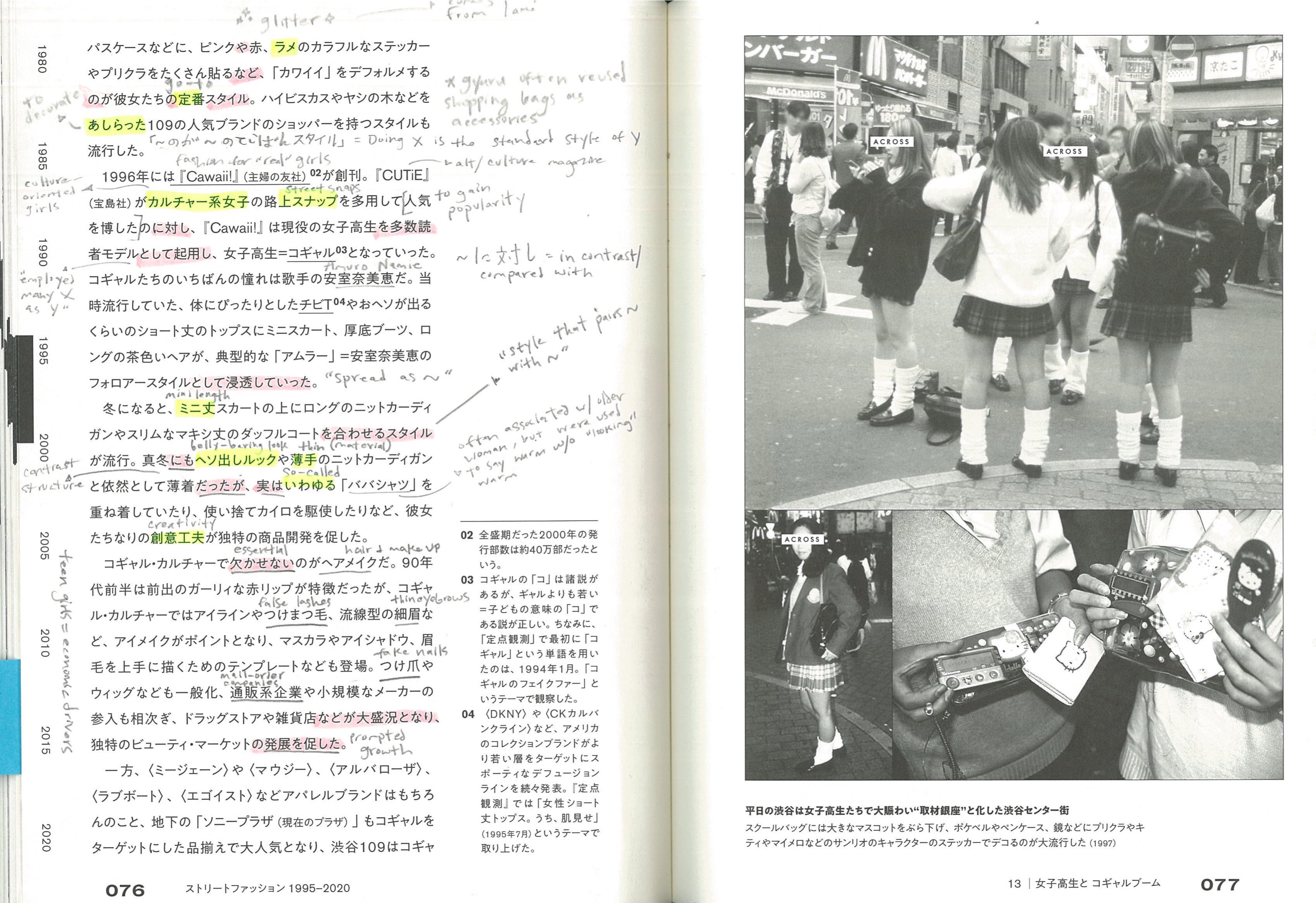
These days, my most common "fields" of study have been Japanese and Heisei era Jfashion. Fortunately, these two things very often coincide. The other day I bought a book on fashion history at a bookstore in Shibuya. It's entirely written in Japanese with nary a furigana in sight. It's going to take a while to get through and translate, but the time is going to pass anyway. 

This morning, on the last day of my Golden Week break, I set up shop at a nearby kissaten and got to work. 

The book (very straight-forwardly called ストリートファッション / Street Fashion) covers Japanese street fashion from 1980 - 2020. I did consider starting at the beginning, but let's be real, my favorite decade of Jfashion is late 90s - early 2000s so I was eager to get to that part. 

I started by transcribing the first two pages, and then chipped away at the translation. 


As it's only the introduction, I didn't learn anything super groundbreaking. In fairness, this is an area I'm pretty well acquainted with already, so I wasn't surprised. Regardless, it's nice to have more primary sources, especially written in the language of origin. 

I'm sure many of you are cringing at the sight of all my hand-written notes. I love writing in my books, always have and always will. I have a couple of friends that are pretty pedantic about the quality of their paperbacks and would never even crack a spine. I don't know... I think notes and smudges and wrinkles tell a story about where a book has been, as cliche as that sounds. It's always a joy to me when a secondhand book I've bought has a former reader's notes in the margins. It's like a conversation through time. 

I haven't yet decided what I'm going to do with this information. I'm considering a couple of ideas for more serious posts, albeit once I get through more material. Or it might just stay in my brain. Who knows. 

After a couple hours, I called it quits and made my way back home in the rain. 

I recently got back into playing Stardew Valley so I've been on my farm grind. This is me with my various chickens and ducks, which I have named after different types of noodles. 

The first half of my Golden Week was garbage, but it ended all right. I'm playing a lot of Stardew Valley and dancing around my room. The last three days of the holiday were good. I'm processing a lot of big thoughts and maybe I'll find a decent way to verbalize them. I don't know. We'll see. 

Why I'm Tired of Performing Online (And What That Has to Do with Gyaru)

Galsnap as viewed through the Wayback Machine


I was a middle schooler at a time when phones weren't that smart. Social media was the Wild West. Each discovered platform felt new, a cool and fresh way to express yourself and connect with others. These days, when I compare my memory of social media as an 11-year-old to social media now, the one thing that stands out is how everything has become about buying and being sold. 

My Instagram is almost entirely co-opted by ads. I'll sooner see an ad for some new, drop-shipped kawaii brand on my timeline than I'll see a post from one of my actual friends. And when I do see a post from my friends, they are usually stylized to the point of looking like an editorial in a magazine. I don't think this is a coincidence. 

Long gone are the days of blurry breakfast photos or a funny-faced, too-close snapshot with friends. Everything is so filtered (and I don't mean in sepia or Mayfair) and well-composed. Their outfits looked planned in advance, same with the location. It all has the air of a professional photo shoot, even when it's a post by your buddy who works in finance. 

I remember when this switch was occurring: when we were going from random home-photos to meticulously coordinating the aesthetics of our grid. I thought it was pretty cool at the time. I wanted to take part. But the longer it's gone on, the more I've come to loathe it. It didn't take long for me to identify why it sits so poorly. 

I've boiled it down to two specific reasons: 

1. The everyday person has to transform themselves into a brand. 

2. (and this is a consequence of 1) We are all constantly selling ourselves. 

And for what? To whom?? It makes sense for a company's Instagram to be selling something, but for the average user, what's the objective? Why are we expected to perform the same way? I think this coincides with hustle culture and the idea that we must optimize every single second of our lives and that not a nano-second of it should be wasted on something that doesn't potentially make us money. That last point is particularly funny to me because I think that in spite of this push for "hustling" and "optimization" we do have a tendency to waste a lot of our time doom-scrolling. 

Now everyone’s an influencer. We’re all trying to prove that we’re interesting, worthy, creative. That our output has value.

I'm not a hustler. I am a woman of leisure. I think life is about enjoying it, taking care of each other, and making meaning wherever we can. I'm also under no delusion that I'm some special person whose ideas or art needs to be heard/experienced on a wide scale. That's not to suggest that I think I should stop vocalizing my ideas or making art simply because it's not "the best" or super popular. Far from it. I think the exact opposite. I think it's worth making art even if nobody cares. Even if nobody ever cares. 

If you've made it this far, I'm sure you're wondering how I'm going to connect this to gyaru. If you're one of my friends or have been here a while, then you'll know I can connect anything to gyaru. 

These days, most of the modern gyaru congregate on Twitter (X) and Instagram. I would love to be a bigger part of the community, and have longed for it since I first got into gyaru, but the way that most popular gyaru figures use social media these days is so... off-putting to me. 

This isn’t a critique of any individual gyaru creator, but rather an observation of what it takes to gain visibility on today’s social media platforms. The most popular gyaru (both Japanese and gaijin) tend to converge on a highly specific aesthetic. It’s a polished, consistent version of gyaru that clearly resonates with Gen Z and Gen Alpha audiences. Their success often hinges not just on style, but on strategic posting, branding, and engagement. Many Japanese gyaru today double as bikini models or hostesses, roles long associated with the subculture, but their self-promotion (whether for girls’ bars, club events, or personal brands) feels distinctly shaped by the algorithm-driven internet age. Likewise, prominent gaijin gyaru typically monetize their personas through content creation, music, fashion, or sponsored posts. What results is a kind of homogenization: a gyaru image tailored for maximum reach, visibility, and marketability.

To be clear, I’m not suggesting that any of this is inherently unethical. Sex work and its adjacent industries are legitimate forms of labor and should be safe, respected, and de-stigmatized. Likewise, getting paid for your work (creative, aesthetic, or otherwise) doesn’t diminish its value or authenticity.

What I’m pointing to is the broader shift: gyaru, like so many alternative subcultures, has become a business. When something becomes popular, it becomes sellable. This isn’t so much a critique of the individuals participating in that system as it is of the platforms that incentivize this behavior. Algorithms reward what generates profit, especially for the platforms themselves.

So...where do we go from here? I almost ended this as just a reflection on a modern trend, but I’m honestly exhausted by doomer takes that stop at “Well, what can we even do?” Sure, we may not have the power to overhaul these platforms on our own, but that doesn’t mean we’re powerless.

If you're like me and feel alienated by the way social media functions today, there are really only two choices: opt out completely, or reclaim it on your own terms.

If you’re gyaru (and even if you’re not), post whatever the hell you want. Maybe you already are. Amazing! Keep going. Spam a bunch of pics in a single day, then vanish for a month. Post what you want, when you want. That’s the point. 

It starts with us. 

The motivation shouldn’t be external validation. It should be inner joy. 

reflecting on my relationship with gyaru

two years of gal ♡


For the past few months, I've been reflecting on my relationship with gyaru. And it really does feel like a relationship. We've had our ups and downs, but overall it's been a wonderful and rewarding experience. 

Recently (although I'm sure this is no shock considering my blog content), I've been drawn more and more to old school gyaru, which doesn't include a lot of today's most popular and widely accepted signifiers of gal. As a result, I've struggled with feeling like I'm easily perceived as gyaru. 

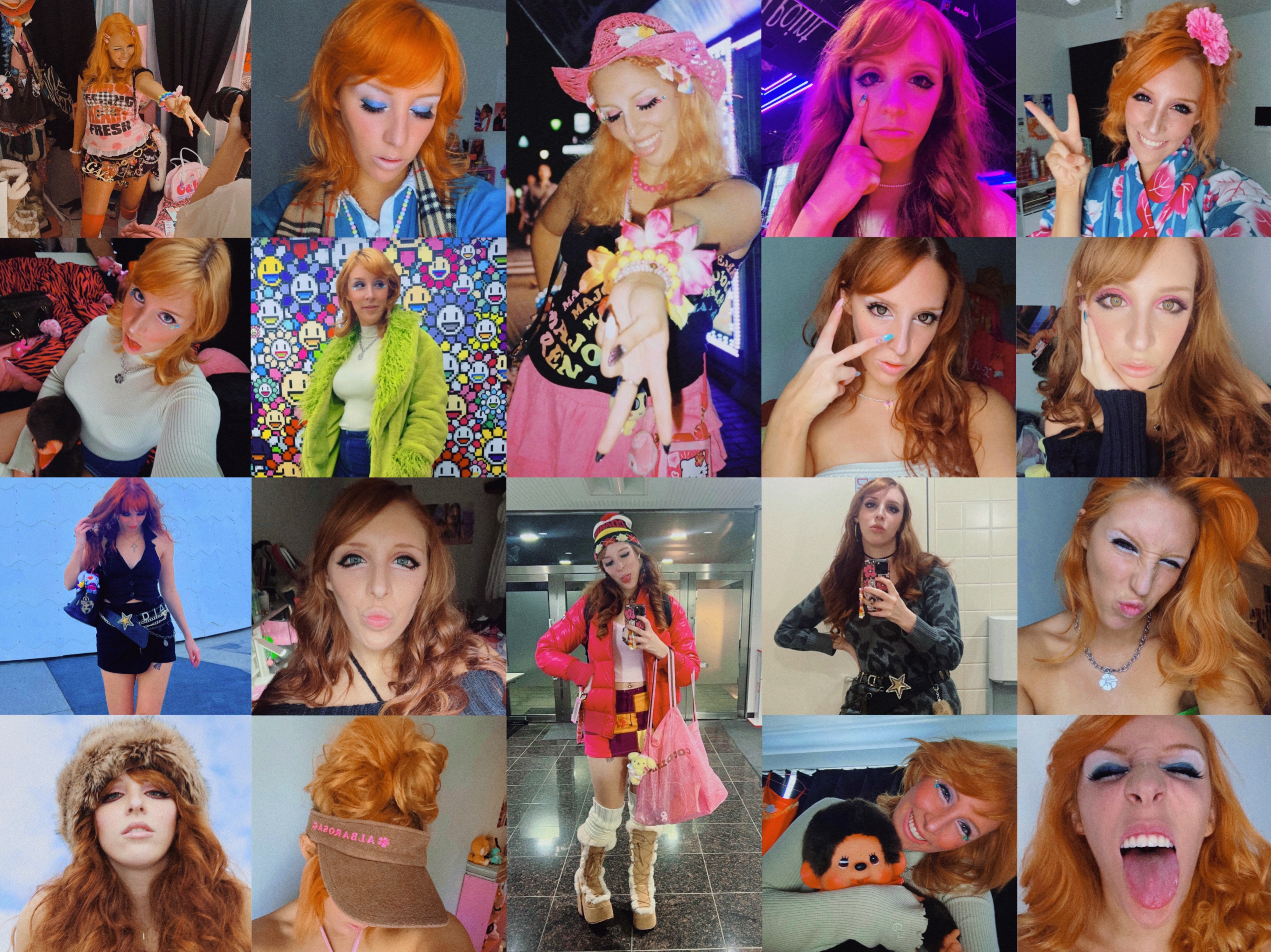
It's my personal opinion that it is exceedingly difficult for a non-East Asian—particularly non-Japanese— gyaru to read as gal when wearing more "historically accurate" (that sounds pretentious, I know, but I can't think of another way to phrase it) 90s-gyaru make-up. These days, contact lenses and a droop are all but required to be gyaru as a foreigner, even if the community at large might be hesitant, or even resistant, to admit it. 

I used to do more 2010s/tsuyome make-up at the beginning of my gyaru journey. I do—and did—like the way it looked, but it wasn't super comfortable or "true" to me. I also think that style of make looks best with post-2008 gyaru styles (a la tsuyome, and hime), and I've realized that tsuyome doesn't really suit me. They say black is universally flattering, but I don't think it does me many favors. I think the bright colors of ganguro do my complexion and hair color a world of good. 

I'm not considering abandoning gyaru; not at all! But I've been thinking a lot about the style, my performance of it, and what I want out of the fashion and community at large. 


✦ .  ⁺   . ✦ .  ⁺   . ✦


I've mentioned this before, but after going off birth control, I gained about 15 to 20 pounds. I want to preface this by saying that weight gain and loss (especially for women) is a sensitive topic. I’m only speaking from my own experience, and I want to acknowledge that some of what I’m about to say isn’t healthy or body-positive thinking. If you feel this might be triggering, please skip to the next section.

With that said, I've been feeling... well, I've been feeling less confident. It has less to do with my actual figure and more with the fact that most of my clothing doesn't fit anymore. It was a bit devastating.

Living in Japan, finding clothes that fit me sometimes feels like an exercise in futility. I'm tall by Japanese standards, so pants are never long enough. Even XL in Japanese sizes don't typically work due to the shape of my body: larger thighs and hips vs a smaller (by comparison) waist; a larger bust than the Japanese average. 

It is 2025, and even in Japan there have been some strides (minor though they are) towards more accessible clothing, but as a gyaru...

I know I'm not the only gal to complain about this, and I recognize that I'm still straight-sized and my struggles are not as severe as those who are plus-sized. But I have to admit, as a gal who loves Alba Rosa and CocoBongo, it's a bit demoralizing to see all these cute clothes on Mercari JP and know that I wont fit into them. Even if I were to starve myself, they still likely wouldn't fit due to the way my body is shaped. I am a woman and most of those clothes were made for Japanese teenagers. 

This isn't an insurmountable problem. And as anyone with a body knows, weight fluctuates. It's simply the reality of being human. 

I say all of this as a way to explain where my mind is at. I miss putting together coordinates and feeling great when wearing them. These days, I feel ugly and massive. Intellectually, I know that being "fat" is not an insult and that being thin is not a requirement for gyaru. But years and years of social conditioning on what it means to be a beautiful woman has no doubt effected the way I perceive myself. That, and (let's be honest) gyaru has always favored thin bodies. 

All the girls featured in Egg magazine are (and were) incredibly thin. We might know and acknowledge that gyaru is for everybody, but all the media (Egg is considered the gyaru bible, for fuck's sake) points to the fact that the "best" gyaru or the most celebrated ones inhabit a thin, teenage body. 


✦ .  ⁺   . ✦ .  ⁺   . ✦


In the past year, I've fallen in love with old school gyaru. It's without a doubt my favorite period of gal history and I've had such a great time learning about its origins and collecting many of the brands that were popular at the time. But the more I've begun to wear old school (specifically between the years of 1996-2003) make-up, I've noticed that I don't always "look" gyaru. I feel gyaru, but I don't know if I would be confident posting on a gyaru community. At first, I tried to identify what the reason for this was. Do I need to be tanner? More white shadow? More eyeliner? I've experimented with it all. 

There's a general rule of thumb among veteran gals that basically assesses a gyaru look on the basis of a few key elements: tan, make, hair and nails. If you're lacking in one, you have to go harder and heavier in the other areas. I wholeheartedly agree with this. 

So, by this logic, if I am doing the "more subtle" old school make, then I should being going harder in the other areas. But what I think people perceive as "going harder" in gyaru is more associated with 2010s gyaru styles such as tsuyome or the modern and Tiktok-ified version of gyaru kei. Old school gyaru weren't yet deco-ing their nails to the extent that the gals in the 2010s were. In fact, most 90s gyaru favored square-shaped nails over the iconic claws of kuro gyaru. And as a ginger with a pale complexion, there is only a certain level of tan that I can realistically achieve before it starts to veer towards racial mockery. 

Nothing is stopping me from blending substyles. As much as the gaijin gyaru community favors historical purity, the reality is that what gyaru is in 2025 is an amalgamation of all of gyaru history's "best ofs." It also favors more kawaii-esque elements such as dolly circle lenses and spikey-manga lases, both of which were not common among 90s gals. 

This begets a question: is it possible for a non-Japanese person to look gyaru while in old school gal, sans droop and circle lenses? Has gyaru evolved past this more subtle variation? 

I'm not sure what to make of these feelings. My love for old-school gyaru fashion and history is unwavering, but should I abandon the gyaru moniker in favor for something more nebulous? Should I abandon labels entirely? 


✦ .  ⁺   . ✦ .  ⁺   . ✦


In all other realms, I am extraordinarily happy. I have a partner who I love and who loves me, I've discovered my love for teaching, I have friends I love, and I love living in Tokyo. I'm surrounded by love. 

The above issues don't effect my life at all... outside of the few moments when I think long and hard about myself as gyaru. Divorced from this label, I am simply Lexie who is now 29 years old; whose body has changed and will continue to change in the future. But I don't want a divorce. Gyaru is important to me. 

As I write this, I am starting to realize that I am speaking on gyaru solely as an online performance. I feel the most insecure about my body when I see it reflected back at me in photos; when I’m wearing my ganguro clothes and wishing I were thin like the Japanese gyaru they were originally designed for. I feel the worst about my own expression of gyaru when I notice that the most popular modern gyaru on Instagram and Twitter are the ones with giant circle lenses and vague kawaii fashion.

If my goal is to be a "popular gyaru" online, there is nothing stopping me from going to back to that tsuyome look. But that's an inane goal. 

It’s interesting (and a little unsettling) to be someone who studied media and communications in university, who fully understands how social media is designed to addict us and feed us a false sense of validation, and yet still fall victim to it. 

I had begun to associate my validity as a gyaru with the amount of attention my looks or make received online, which, admittedly, has never been a whole lot. This is not healthy thinking, and it shouldn’t be the point of gyaru. I know this, but "knowing" and "feeling" often act independently of each other, and the feelings...well... tend to feel most real.


✦ .  ⁺   . ✦ .  ⁺   . ✦


I'm writing this because it feels good to get out. I've also somehow managed to cultivate a small group of amazing mutuals (of which I am forever grateful) and if anyone's going to give me good feedback, it'll be them.  

I don't know what conclusion I'm drawing from this. I don't think there is one. Not yet. 

The only thing I'm pretty certain of is that gyaru, like anything else in life, is an ebb and flow. I might be ebbing now, but the flow will come again. It's inevitable. 

make point: anna sui rouge lipstick

For an old-school gyaru, there are really only two lip colors that matter: white and a very light pink. Since a white lip does me little to no favors, I've been on the hunt for the perfect pink.

Old-school gyaru lipstick follows the trends of the 90s and early 2000s (when ganguro was at its peak); the lips are light and frosty. While Mac has a solid range of frosted lipsticks—including some nostalgic 90s re-releases—I wanted to try a different brand. 

Enter stage left: Anna Sui. 


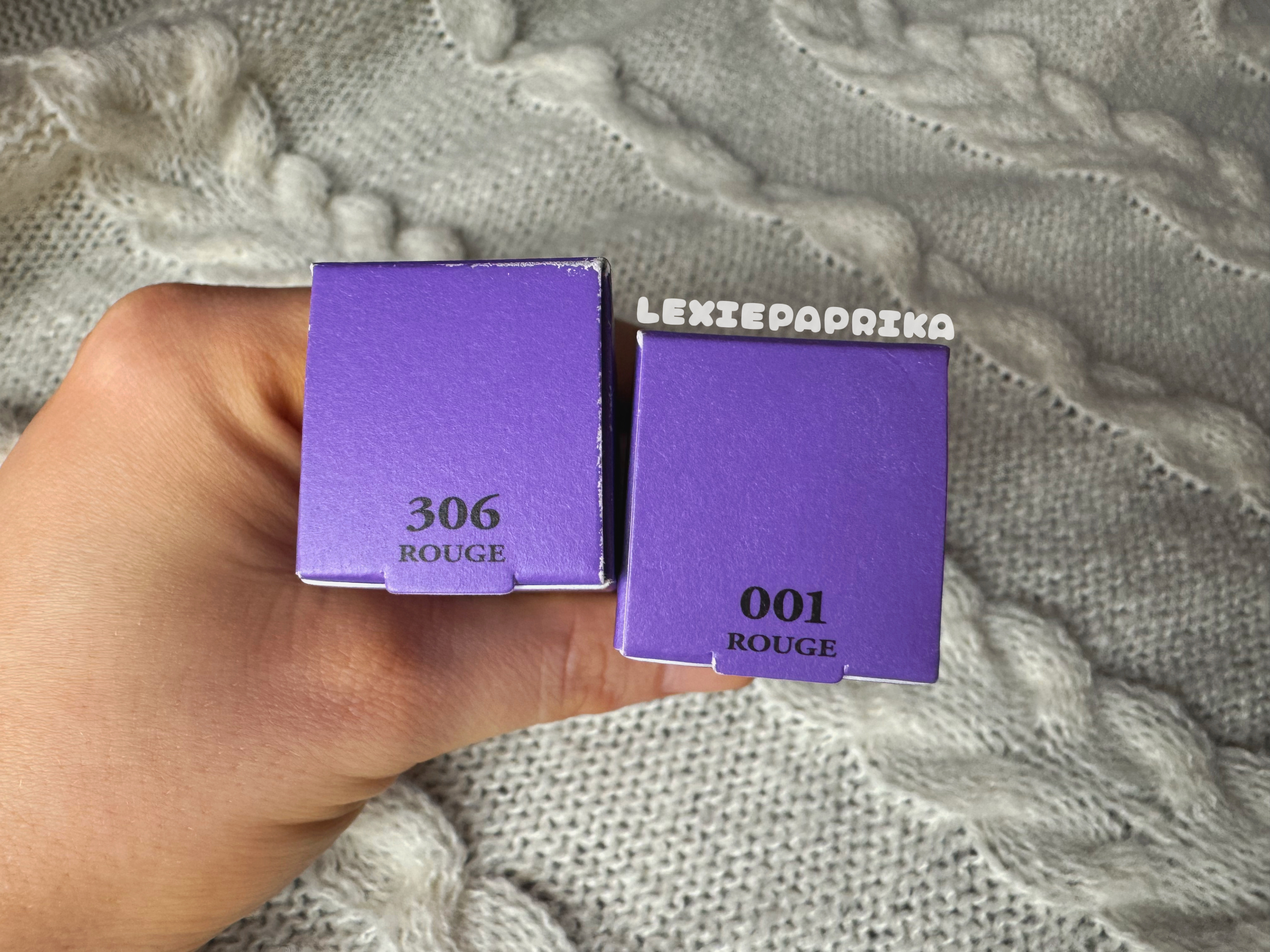
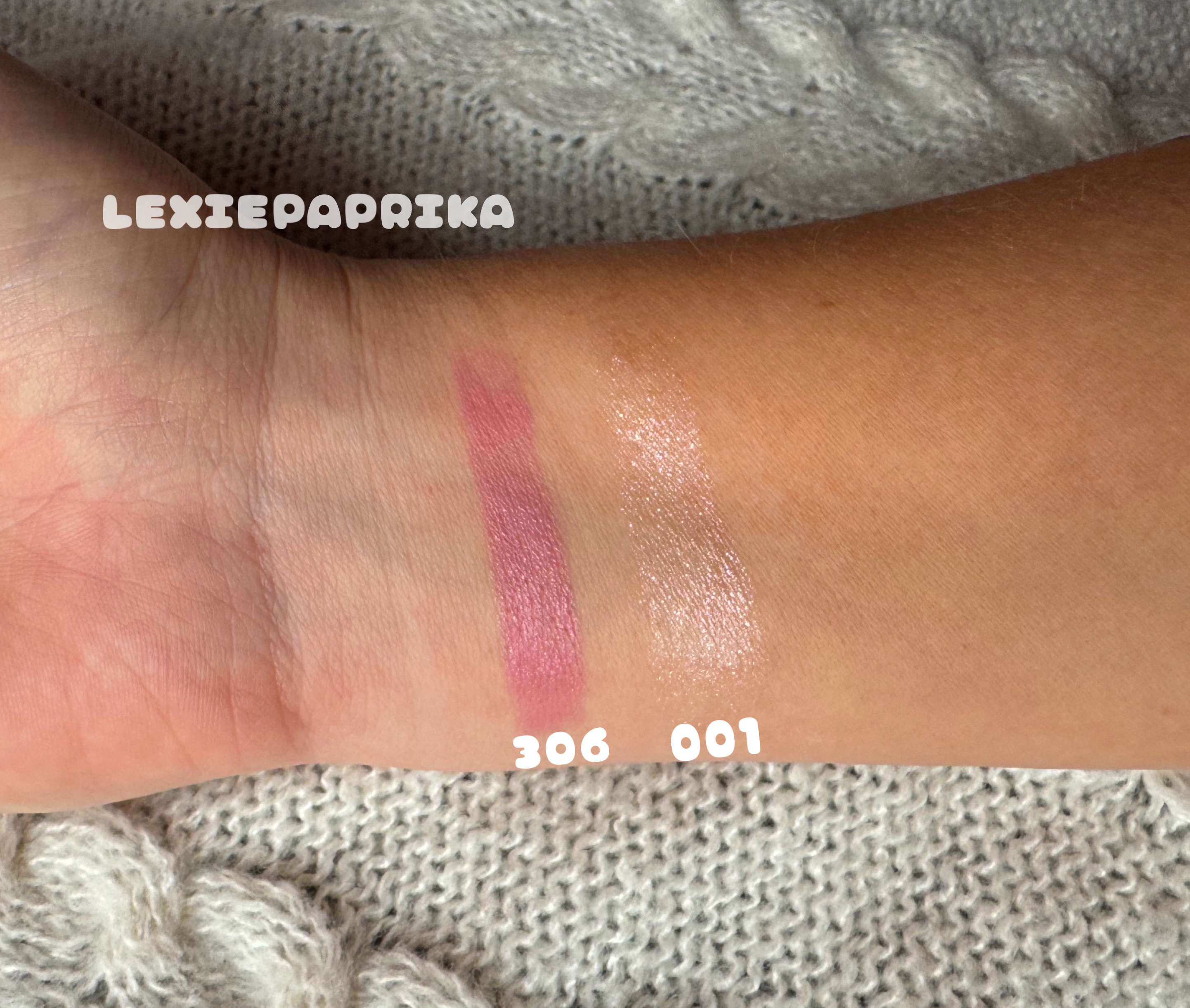
Yesterday, I picked up two of Anna Sui's "Rouge" lipsticks, which is their newest line. I got the colors 001 (Sunshine Pink) and 306 (Mauve.) I picked them up at a Cosme store near my work.


Swatching in-store, I immediately gravitated toward the lightest tones.


The packaging is gorgeous. The tubes are designed to resemble the Anna Sui perfume bottle, with its glossy black embossed details. 


The top features a beautiful rose. 


The lipstick itself clicks out from the bottom, which feels very luxe!


The colors are gorgeous, especially 001. The kira kira is magical. 


The feel of the lipstick on my wrist is buttery and smooth. 001 is sheer and very reflective, and 306 is exactly as described: mauve. It's slightly cool-toned and delicate. 


A closer look...


Now on the lips! 

The feel is very luxurious and almost... melty. Like it's sinking into my lips instead of just sitting on top of them. One layer was enough to get this nice shine. It's sheer, but the glitter really stands out.

I can definitely see myself wearing this alone or layering it over concealer for an even more gyaru-inspired look. 


I was worried 306 might be too dark, but it actually reads as a soft, pastel pink.

FINAL THOUGHTS

These lipsticks are adorable. They both look and feel great on the lips. The color applies effortlessly, and the smooth texture makes it feel really indulgent.

I think I will try combining 306 with 001 for an extra frosty effect!

Price: 3,850 Yen each

Now the real question is... do I need to get an Anna Sui perfume to match???


the ganguro starter pack: the ultimate guide to old school gyaru


Old-school gyaru is a broad and somewhat nebulous term. It generally describes a period of gyaru that extends from the 90s to about 2008, defined by tan skin, bleached hair, and a bold yet comparatively 'natural' makeup look contrasted to what came later. 

Ganguro, much like the burgeoning kogals of the 80s, were the foundation from which all other gyaru substyles evolved. 

This is my favorite period of gyaru, and I’ve spent a lot of time researching its attitude, fashion, and cultural impact. I wanted to make a starter kit for Ganguro, not as an expert but as someone who loves the style and wears it daily. This is by no means a definitive guide to gyaru, but I hope it serves as a launching pad for anyone interested in Ganguro. 


Glossary

  • Ganguro (ガングロ) – A gyaru substyle featuring a deep tan, bleached hair, and bold white makeup.
  • Gonguro (ゴングロ) – A more extreme version of ganguro with an even darker tan, usually achieved using makeup and tanning lotions.
  • Yamanba (ヤマンバ) & Manba (マンバ) – Later, exaggerated variations of ganguro that introduced more intense colors and makeup. 
  • Shibuya 109 (渋谷109) – The shopping mall in Tokyo that was the center of gyaru fashion, colloquially referred to as Marukyu (マルキュー).
  • Teamer (チーマー) – A delinquent subculture in Japan during the 80s and 90s, often associated with gangs and rebellious youth. Many early gyaru dated Teamers.
  • Para Para (パラパラ) – A synchronized dance style popular among gyaru, often performed to Eurobeat music in clubs.
  • Shiro gyaru (白ギャル) – The opposite of ganguro; a gyaru style that does not involve tanning and instead emphasizes fair skin. Substyles like himekaji and rokku gyaru do not require tanning. 
  • Gyaru-kei (ギャル系) – A broad term referring to gyaru fashion and all its substyles.


The History of Ganguro

Origins

Gyaru can be traced back to the late 70s and 80s in Japan, when wealthy school girls developed an interest in luxury Western fashion. They purchased items from Burberry and Louis Vuitton, rolled up their uniform skirts, and wore slouched socks. Many were the girlfriends of delinquent Japanese Teamers. By the time ganguro came around in the 90s, the style expanded beyond the upper echelon and became more associated with the middle-class, with girls from varying income levels participating in the style. 

Ganguro was a hodgepodge of influences, both real and imagined: California beach culture, Amuraa fashion, and a teenage-led rebellion against Japan's traditional beauty standards. The tanned skin and bleached hair evoked Malibu surfers, but it also reflected the broader trend in Japan at the time, which, thanks to the popularity of TV dramas like Beach Boys, cemented the casual "beachy" look in the cultural zeitgeist. 
  • Ganguro’s roots trace back to kogal, which emphasized loose socks, modified schoolgirl uniforms, and a carefree attitude.
  • The aesthetic was heavily influenced by the coordinates of Shibuya 109 Charisma shop clerks, the idealized perception of California beach culture, Western hip-hop celebrity style, and Japanese (Okinawan) singer Namie Amuro.
  • Egg magazine played a crucial role in promoting ganguro, featuring models like Buriteri, who, among others, defined the subculture’s attitude and style.
  • The style was most active from the mid-90s to the early 2000s, with variations and substyles like Yamanba and Kuro taking over in later years.

Lifestyle and Community

Ganguro, primarily middle-class teens and young adults, often congregated in Ikebukuro and Shibuya, especially around the iconic Shibuya 109 (Marukyu) mall. They went shopping, attended Para Para dance clubs, did karaoke, took PuriKura photos, and socialized with their friends. 

This subculture emphasized fun, friendship, and a vibrant social life. It was all about being true to yourself and not letting the bastards get you down. 


How Is Ganguro Different from Other Gyaru Substyles?

Most people today associate gyaru with heavily exaggerated makeup styles (notably the iconic "tarume" or droop), but old-school ganguro was more restrained by comparison.

  • The key point is NOT the droop eyeliner shape.
    • Unlike later gyaru substyles, early ganguro makeup focused more on white eyeshadow and simple eyeliner rather than an exaggerated shape.
  • It was largely tied to mainstream Tokyo trends.
    • Old-school ganguro fashion was still closely linked to trends that were popular among teens and young adults at the time. Shibuya 109 brands and Louis Vuitton bags were widespread. 
  • It is the progenitor of many later gyaru styles.
    • You can see the beginnings of many modern gyaru substyles in early ganguro.
  • It was subtle (by today’s standards).
    • Compared to current gyaru styles, old-school ganguro looked more "natural." At the time, it was considered bold. 


Fashion

Signature Brands (Shibuya 109 stores)

  • Alba Rosa
  • Cocolulu
  • MeJane
  • Egoist
  • Blue Moon Blue
  • Roco Nails
  • Jassie
  • Cecil McBee
  • Love Boat
  • Idol

How to Shop for Ganguro Today

Since most old-school gyaru brands are extinct (with the exception of Egoist, who no longer makes Ganguro clothing), focus on silhouettes and colors rather than specific labels. Look for:

  • A-line skirts, mock neck tops, summer knits, casual resort wear, and stacked platform boots.
  • Bright primary colors like oranges, yellows, and greens; bold and fun patterns. 
  • Mercari Japan and Yahoo Auctions can be used to track down old brands, although the prices can be steep and the sizing uninclusive.
  • Thrift stores are a great place to start. 

Accessories

  • Platform shoes: Chunky sneakers (Buffalo and Question Mark were favored brands), wedge sandals, platform boots.
  • Bracelets & rings: Silver, colorful, and stacked in excess.
  • Hibiscus everything: evocative of Alba Rosa.
  • Fake nails: Not yet extreme in this period; they were mostly square-shaped, shorter, and simple compared to modern styles favored by substyles like Kuro/Tsuyome.


Hair and Makeup

Hair

  • Bleached blonde, silver, honey brown, orange that skewed blonde, and caramel tones were most common. Visible dark roots were accepted and, for many of the girls at the time, unavoidable. 
  • Hair was typically straight with soft volume, though some girls opted for crimped, flipped-out, or lightly textured styles.
  • At this point, hair was nowhere near as long as it came to be in later gyaru substyles. Most girls had their hair chopped at the shoulders.

Makeup

  • A tan is the defining feature of ganguro. Nearly all other aspects of the look (the white eyeshadow, light lips, and bleached hair) are meant to enhance and emphasize the tan. However, this does not mean you should go as dark as possible. Stay within what is appropriate for your own skin tone. Do not darken your skin in a way that could be considered offensive (i.e. blackface).
  • White eyeshadow/highlighter: The most defining element of ganguro makeup (aside from the tan), applied heavily on the brow bone and under the eyes.
  • Dark eyeliner: Bold but straightforward, following the natural lash line.
  • False lashes:

    • Fluffy, Western-style lashes were the norm.
    • Spiky "manga-style" lashes became popular in later gyaru substyles.
    • Some ganguro didn't wear false lashes at all. 
  • Lips: 

    Most ganguro tried to de-emphasize the lips.
    • If lips were emphasized at all, it was with very light or white lipstick.


Evolution and Personal Expression

Ganguro style wasn't static. It evolved naturally over time. While some adhered strictly to the core aesthetics, many experimented with variations, reflecting their individual tastes and the deeply personal nature of the subculture. It was due to these experimentations that other iconic substyles (like Yamanba and Kuro/Tsuyome) were born. 

Even during Ganguro's peak, many versions of the style coexisted. Some girls went for a more sporty, Jassie-inspired variation. Others leaned toward sexy. Some went beachy. Don't be afraid to mix and match.


Common Misconceptions About Ganguro

“Ganguro is just blackface.” 
Ganguro is not blackface; it was never intended to mimic or mock Black people. The tan was meant to reflect a California beach-girl aesthetic and to go against the expectation for "paleness" in women. However, it’s important to acknowledge that some individuals at the time did take it a bit too far. For example, according to the book Japanese School Girl Inferno, Egg model Buriteri allegedly used a foundation that was intended for Black women to achieve her look. While this is worth discussing, the style itself was not created with racist intent, nor is it racist when done appropriately within the natural range of one's own skin tone.

“Ganguro makeup was meant to look Western or imitate white people.”
This is a common misunderstanding. Ganguro was inspired by California beach culture, but it was never about trying to look white. The tan, white-accented makeup and overall aesthetic were stylized and exaggerated in a way that made ganguro distinctly Japanese rather than a direct imitation of any Western look.

"Ganguro is a dead substyle."

While ganguro is no longer as mainstream as it was in the 90s and early 2000s, it never truly disappeared. Additionally, ganguro’s influence can still be seen in later gyaru substyles like manba, banba, and kuro, which boldened many of ganguro's aesthetics. 

"Ganguro is no longer recognizably gyaru."

Some people claim that ganguro doesn’t "look gyaru enough" by today’s standards (especially when worn by non-Japanese gyaru), but this ignores the fact that ganguro was a defining part of early gyaru history. Modern gyaru has changed over time, but ganguro still follows the same core gyaru principles: rebellion against traditional beauty norms, exaggerated styling, and a strong sense of individuality. The shift in trends doesn’t erase ganguro’s place in gyaru culture.


Getting Started

Getting into old-school gyaru, particularly ganguro, can feel overwhelming at first, but breaking it down into steps makes it much more approachable. Instead of focusing on achieving perfection right away, start with the core elements and build your look over time. That’s how the original Ganguro did it.  

Step 1: Focus on Key Elements

Start with the most recognizable aspects of ganguro:

  • Tanning: Whether through bronzer, self-tanner, or a safe tanning method, the tan is the foundation of the look.
  • White eyeshadow & dark eyeliner
  • Casual, beach-inspired fashion, a-line skirts, bright tops, platform shoes.
  • Confidence and attitude: Ganguro was as much about mindset as it was about fashion.

Step 2: Build Your Wardrobe Gradually

You don’t need to own an entire old-school gyaru closet overnight! Focus on:

  • Basic pieces: Emulate common and popular silhouettes.
  • Colors and patterns: Look for bright oranges, yellows, greens, hibiscus prints, and fun patterns.
  • Thrift stores and secondhand apps: Mercari Japan, Yahoo Auctions, and local thrift shops can help you find ganguro-inspired pieces.

Step 3: Simplify Your Hair & Makeup

  • Hair: Start with a bleached color of your liking. Blonde, honey brown, or silver tones. Shoulder-length styles were common.
  • Makeup: The essentials are white eyeshadow, tan and matte foundation, dark eyeliner, fluffy lashes, and pale lips. Keep it bold but simple.

Step 4: Find Community & Inspiration

  • Look through old magazines and gyaru blogs to study actual ganguro outfits.
  • Watch Japanese media from the time period to get a feel for the era.
  • Find like-minded individuals (Like me! Hey!)

Step 5: Embrace the Gyaru Mindset

  • Confidence is key. Own your look, and don’t be afraid to stand out.
  • Ganguro challenged beauty norms and emphasized self-expression. Be unapologetically you. 
  • Deepen your friendships, share makeup tips, and take care of each other. 

Gyaru and Hyperreality: The Blurred Line Between Authenticity and Performance

The Gyaru Illusion: A Rebellion Without a Cause?

Gyaru reached its peak at the turn of the 21st century. It was a bold cultural movement that offered young girls a means of self-expression beyond the narrow confines of Japan’s expectations of womanhood. Shibuya was their meeting ground. Sun-kissed and teetering on platform boots, they moved in packs, their limbs dusted in glitter and fruity-smelling lotions, their laughter cutting through the din of Center-Gai.
Gyaru was a rejection of a long-held beauty standard. But subversion (no matter how sincere) has a short shelf life. What was once shocking becomes marketable, and what was marketable becomes mainstream. Countercultural movements, once vilified and dismissed as fringe, eventually find their way onto runways and marketing campaigns. 
The punk subculture, synonymous with a DIY ethos and sartorial anarchy, has been elevated by designers like Malcolm Mclaren and Vivienne Westwood, who incorporated bondage trousers, safety pins, studs, chains, and tartan into their collections. Similarly, grunge, once defined by thrift store finds and a disaffected, anti-corporate attitude, was famously reinterpreted by Marc Jacobs in his 1993 Perry Ellis collection, bringing ripped jeans and flannel to the world of luxury fashion. 
In Japan, gyaru followed a similar trajectory. It was pioneered by high school girls who embraced radical self-expression, only for corporations to commodify their defiance and sell it right back to them through fashion magazines and mainstream branding, creating a self-perpetuating ouroboros of rebellion and consumption.
Gyaru is often described as a rebellion against traditional Japanese beauty norms. However, unlike a grassroots political movement, the gyaru’s protest was not an ideological one but aesthetic. Gyaru were not advocating for systemic change or engaging in overt political activism; rather, they were constructing identity through consumer choices. Their rejection of Japanese beauty norms was not framed through the lens of feminist discourse but was instead an aesthetic assertion of selfhood within a consumer-driven society.
This intersection of rebellion and consumerism made gyaru uniquely susceptible to commodification. Jean Baudrillard, in Simulacra and Simulation (1981), theorized that when media endlessly reproduces an image, it replaces reality itself, creating a self-contained system of meaning that no longer references an original. This happened to gyaru even at the height of its popularity: fashion magazines, clothing brands, and nightlife industries dictated the parameters of the subculture, ensuring that market forces had a hand in shaping its resistance. The question is not whether gyaru was "authentic" or "commercialized;” instead, it was always both. The more gyaru attempted to define itself through aesthetic resistance, the more it played into the logic of consumer spectacle, becoming a mediated construct that existed as much in advertising as it did in practice.
Gyaru became trapped in a loop of reinvention, forever cycling between rebellion and commodification.

Gyaru as a Rebellion Against Japanese Beauty Norms

From its inception, gyaru functioned as a rejection of Japan’s dominant feminine ideal: pale skin, natural beauty, and a reserved demeanor. Drawing inspiration from Californian beach culture, hostess aesthetics, and Japanese idols like Namie Amuro, gyarus cultivated an aesthetic that contrasted sharply with mainstream expectations of understated femininity. However, this emulation of Western beauty standards was not an attempt at authenticity but rather an exercise in hyperreality.
Baudrillard’s concept of the precession of simulacra posits that a representation can detach from its original referent and take on a life of its own. Gyaru did not simply borrow from Western fashion; it created a stylized, media-driven version of Western beauty that had no true reference point in reality. This manufactured aesthetic, endlessly reproduced in magazines and advertisements, became its own hyperreal construct. One that girls performed and embodied, often without any conscious reference to its supposed origins.
In this way, gyaru’s rejection of Japanese femininity was paradoxically a performance of another highly constructed femininity. The boldness, excess, and flamboyance of gyaru were not always natural expressions but mediated choices dictated by the ever-evolving standards of the subculture’s own imagery. This aligns with Baudrillard’s assertion that in a hyperreal society, authenticity is no longer a matter of referencing an original but rather maintaining the illusion of originality within a closed system of subcultural signs.

Media, Magazines, and Commodification

Fashion media played a crucial role in shaping the gyaru subculture. Publications like Egg, Popteen, and Ranzuki did not merely document gyaru fashion; they dictated its evolution. These magazines constructed gyaru as a self-referential aesthetic, feeding an endless cycle in which readers emulated the images they consumed, which in turn reinforced those images as authentic. Baudrillard describes this phenomenon as "the map preceding the territory," where the representation of culture becomes more real than the lived experience itself.
Additionally, Baudrillard’s The Consumer Society: Myths and Structures (1970) outlines how consumption operates as a system of signification, wherein cultural products serve not just functional purposes but communicate identity, status, and belonging. Gyaru exemplified this principle; fashion choices, tanning salons, colored contacts, and elaborate nails were not simply matters of personal style but signifiers of subcultural participation. Yet, this emphasis on visual markers of identity made gyaru highly susceptible to commercialization. Even the body itself became a curated, modifiable product, reinforcing the notion that selfhood could be purchased, produced, and perfected.
The role of consumerism in gyaru’s evolution cannot be overstated. While many subcultures formed around shared ideologies or musical preferences, gyaru was fundamentally rooted in aesthetic consumption. It was through the accumulation of specific cosmetic products, clothing brands, and accessories that one could fully embody the gyaru identity. 
While gyaru, as a designation, can also describe an outspoken attitude or social behavior, it is near impossible to separate the attitude from the aestheticism and maintain recognizability. This further supports Baudrillard’s argument that modern consumer societies function through an endless cycle of signifiers, where meaning is derived not from substance but from participation in a system of appearances.

The Spectacle of Gyaru: When Image Becomes Reality

In The Society of the Spectacle (1967), Guy Debord argues that subcultures, once authentic expressions of resistance, are eventually transformed into commodified images that obscure their original meaning. This phenomenon was clearly visible in the evolution of gyaru. By the late 2000s, gyaru had become a spectacle, its representation in media eclipsing its lived reality. Fashion magazines amplified gyaru’s visibility, transforming it from a youth-driven subculture into a fully commercialized lifestyle brand.
The advent of social media in the 2000s accelerated this process, further detaching gyaru from its origins. As smartphones and platforms like Instagram and gyaru-focused blogs became ubiquitous in the late 2000s and early 2010s, gyaru culture was increasingly mediated through digital performances. The more gyaru was represented in these curated, visual-heavy spaces, the more its authenticity became defined by (and confined to) the act of being seen. By the 2010s, the subculture had reached a point where the spectacle of gyaru had overtaken its lived practice. It became a marketable image, a hyperreal fantasy that could be performed and consumed in fragments rather than lived as a cohesive experience.
Furthermore, the cyclical nature of gyaru’s popularity (its peak in the early 2000s, its decline in the mid-2010s, and its nostalgic revival in the Reiwa era) reinforces Debord’s assertion that the spectacle is self-perpetuating. Even as the original gyaru generation aged out of the subculture, its aesthetic continued circulating in media, repackaged for new consumers who engaged with gyaru as an image rather than an identity.

Gyaru as Postfeminist Hyperreality: Empowerment or Performance?

The transformation scene is a well-worn trope. One that makeover shows, reality TV, and fashion media have milked dry since the early 2000s. A woman, dissatisfied with her appearance, undergoes a dramatic reinvention. The narrative is always the same: empowerment, but only through aesthetic transformation. Look better, live better… or so they say.
Gyaru, in many ways, was framed through this same logic. The subculture was often positioned as a rejection of traditional Japanese beauty norms, a rebellion against pale skin, dark hair, and soft-spoken femininity. But it wasn’t about dismantling those norms; it was about subverting them, amplifying hyper-feminine aesthetics until they became unrecognizable. Instead of natural beauty, gyaru chose extreme artifice: bleached hair, exaggerated eyes, deep tans, impossibly elaborate nails.
This ties directly into Baudrillard’s notion of hyperreality. In Simulacra and Simulation, he argues that in a world where simulations endlessly reproduce themselves, the distinction between the real and the artificial collapses. The simulation becomes the reality. 
Gyaru embodied this perfectly: it wasn’t just a rejection of mainstream beauty. It was the creation of an entirely new, self-contained system of aesthetic meaning, one dictated by magazines, clothing stores, and nightlife industries. To be gyaru was to perform an identity that was both radical and carefully curated, rebellious and yet profoundly entrenched in consumerism.

The Paradox of Gyaru Empowerment

At its core, gyaru presented a challenge to Japan’s rigid expectations of femininity. It allowed young women to take control of their image, and to express themselves on their own terms. And yet, the subculture never truly escaped the trap of aesthetic labor. Gyaru may have rejected the natural, modest ideal but replaced it with a standard that (for some) was just as unattainable, just as expensive, time-consuming, and socially constructed. The hours spent tanning, the elaborate hairstyles, the endless cycle of subcultural fashion trends. Was this liberation, or was it another form of self-surveillance?
The paradox becomes even more pronounced when considering the overlap between gyaru and Japan’s hostess culture. Many gyaru worked in kyabakura (hostess clubs), where their exaggerated femininity was not just a personal choice but a marketable asset. In this context, gyaru’s rebellion was directly commodified for male consumption. It was a form of resistance, but one that operated within structures designed to sell beauty as a product.
Baudrillard’s concept of personalization as a consumer trap applies here. In The Consumer Society: Myths and Structures, he argues that consumer capitalism thrives on the illusion of individuality, that we are sold pre-defined versions of self-expression, packaged as personal choice. Gyaru weren’t following mainstream beauty norms, but they were still adhering to a carefully curated aesthetic, one reinforced by magazines, brands, and those in their community. 
Egg, 2021

Gyaru in the Reiwa Era: Nostalgia and the Hyperreal Resurrection

Subcultures never die. They just become TikTok aesthetics.
Gyaru, once a living community, has largely faded from Japan’s streets. The para-para clubbers, the sun-tanned legs peeking beneath the curtain of a purikura booth, the vibrant chaos of a culture that once thrived in physical spaces. All of it has been largely displaced, archived in fashion magazines, old Egg scans, and digital reuploads. Yet, gyaru’s image remains, repackaged as a Heisei-era fantasy, sold through Instagram reels and Shibuya 109 marketing campaigns.
It’s a tale as old as time: what was once radical becomes retro, and what was once subversive becomes quaint.
Baudrillard (1981) argued that Disneyland exists not merely as a form of entertainment but to convince us that America itself is real. It is a simulation that validates its own mythology. In the same way, modern gyaru nostalgia functions not as a revival of the subculture but as a reminder of a time that, in many ways, never truly existed. The gyaru revival isn’t about bringing back the movement in its rawest form; it’s about recreating a hyperreal fantasy of gyaru. One that has been softened, rebranded, and repackaged for mass consumption. The neon-lit chaos of Shibuya in the 2000s has been edited down into a clean, nostalgic mood board, an aesthetic to be scrolled past and filtered through social media algorithms.
The Shibuya 109 of today capitalizes on its nostalgic past. Retro-styled campaigns use the iconography of old-school gyaru: platform boots, slouchy socks, and early 2000s aesthetics. But the raw, rebellious energy is gone. The grit, the controversy, and the social opposition that once defined gyaru are more or less absent. In its place is curation and commercialization. Where gyaru once developed organically, shaped by high school girls testing the boundaries of fashion and femininity, today’s version is pre-packaged, flattened into an aesthetic that can be picked up and discarded at will.
This shift isn’t unique to gyaru. Subcultures, especially those rooted in fashion, are cyclical. Dick Hebdige (Subculture: The Meaning of Style, 1979) argued that subcultures begin as expressions of resistance, only to be sanitized, stripped for parts, and absorbed by the mainstream. But Baudrillard takes it a step further: in the age of hyperreality, the original event (the subculture as a living, breathing identity) becomes irrelevant. What matters is the representation, the curated aesthetic that lives on long after the movement itself has faded.
In this sense, gyaru now functions more as aesthetic currency than as an active subculture. In an era where nostalgia itself is an industry, gyaru is sold in fragments: a blurred, overly saturated edit set to an Ayumi Hamasaki song, an Instagram post of neatly arranged vintage Alba Rosa pieces, a limited-edition Shibuya 109 shopping bag that nods at the past without carrying any of its cultural weight. The hyperreal version of gyaru (one constructed through media images rather than lived experience) becomes more tangible than the real thing.
And yet, gyaru is not entirely dead. It continues to evolve in digital spaces, existing in a tension between revival and reinvention. But is this a true resurgence or simply another aesthetic trend detached from its original movement? The answer, like everything in hyperreality, is ambiguous. Gyaru today is not the subculture it once was, but it is also not entirely gone. It has become something else. 

DIGITAL BEAUTIES by Julius Wiedemann

The Digital Gyaru and the Heisei Hyperreal Fantasy

For today’s gyaru revivalists, social media is the new Shibuya.
Where once the movement existed in physical spaces, gyaru now thrives in a curated, ephemeral digital landscape. TikTok and Instagram have replaced the old haunts in Shibuya and Ikebukuro, offering new platforms where gyaru can perform their aesthetic, not just for themselves but for an ever-scrolling audience. The streets of Tokyo are no longer the stage; social media is.
Yet this shift has made gyaru more hyperreal than ever.
At its peak, gyaru was at least something tangible. You could step onto Center-Gai and see it in action, feel its presence in the crush of bodies at 109, hear it in the chatter of gyaru-go, and witness its evolution in real-time as trends flared up and burned out within months. It was a lifestyle that required active participation, not just aesthetic adherence. But today, gyaru’s primary existence is mediated through the lens of social media, where filtered, edited, and algorithm-driven imagery dictates how the subculture is consumed and understood.
Baudrillard (1981) argues that hyperreality occurs when the distinction between the real and the representation collapses. When the simulation of a thing becomes more real than the thing itself, this is the paradox of the digital gyaru. The hyperreality of social media has flattened the subculture into a performance of itself, one that often exists independently from lived experience. The highly curated nature of Instagram feeds, the exaggerated edits of TikTok tutorials, and the nostalgia-drenched Y2K revival aesthetics all serve to reinforce a stylized version of gyaru rather than its organic and contradictory reality.
This is not to say that gyaru cannot exist authentically in digital spaces. Rather, the very nature of social media alters its framework. In previous decades, a girl became gyaru through participation. Through how she dressed, where she spent her time, and who she surrounded herself with. Now, one can become gyaru through self-documentation, through the accumulation of highly specific digital signifiers: a cleverly edited TikTok transition, a haul video of Liz Lisa dresses, a perfectly staged Instagram photo bathed in Heisei-era filters. This echoes Baudrillard’s concept of the precession of simulacra, where representation precedes and determines reality, where the performance of gyaru in media becomes more real than the lived subculture itself.
Gyaru is not dead, but it has transmuted. It has become something less real, yet more persistent. Unlike its predecessors, this version of gyaru does not require physical spaces to sustain itself. It does not need a Shibuya 109, a bustling crossing, or a shared community. It thrives in pixels and data, hashtags and explore pages.
Perhaps this is the inevitable fate of all subcultures in the digital age. Not death, but permanent circulation. A subculture does not need to be physically present to be experienced; it only needs to be seen. And in that sense, gyaru may be more alive than ever, even as it exists primarily as an image of itself.

A Rebellion Reframed

Roland Barthes’ Mythologies (1957) suggests that cultural movements, when stripped of their historical contexts, are transformed into myths, presented as natural, timeless phenomena rather than socially constructed practices. This has been the fate of gyaru: its history of social defiance, rejection from mainstream society, and eventual commodification have been largely diluted in favor of a media-friendly fantasy of carefree youth culture.
Yet, this does not mean that modern gyaru are merely engaging in performance. Both things can be true at once: one can participate in gyaru sincerely while also being complicit in its commodification. Even at its height, gyaru was both rebellion and spectacle, self-expression and consumerism. To be gyaru today means navigating this paradox, to embody the aesthetic while also recognizing that it exists within a hyperreal framework.
Perhaps authenticity and performance are no longer opposites but interwoven realities, especially in an era where identity is curated, aestheticized, and mediated through screens. 
Maybe the question isn’t whether gyaru was real but whether, in a postmodern age of endless reinvention, realness matters much at all.